Like many American cities, the streetscape in downtown Brooklyn was for a long time very heavy on the street: a great place to park a car or drive through. But over the past 20 years, the area itself has gone from being a 9-to-5 shopping and business district to one where a growing number of people live 24-7. Since 2004, more than 22,000 housing units have been added to the neighborhood, changing its character so much that its old streetscape just wasn’t cutting it.
“There was a real evolution of the neighborhood,” says Regina Myer, president of the Downtown Brooklyn Partnership (DBP), a business improvement district representing the area’s business owners, shopkeepers, and, increasingly, residential developers. “Frankly, the construction fences were down, and it was really time to look at the public realm afresh.”
So in late 2018, DBP hired the urban design and architecture firms WXY and Bjarke Ingels Group (BIG) to come up with some new ideas for Downtown Brooklyn’s streetscape. Myer says her organization wanted “infrastructure that really focused in on the pedestrian and mobility, shared streets, increased biodiversity, and also really making sure this was a bold plan for Brooklyn, that it didn’t look like something generic.”
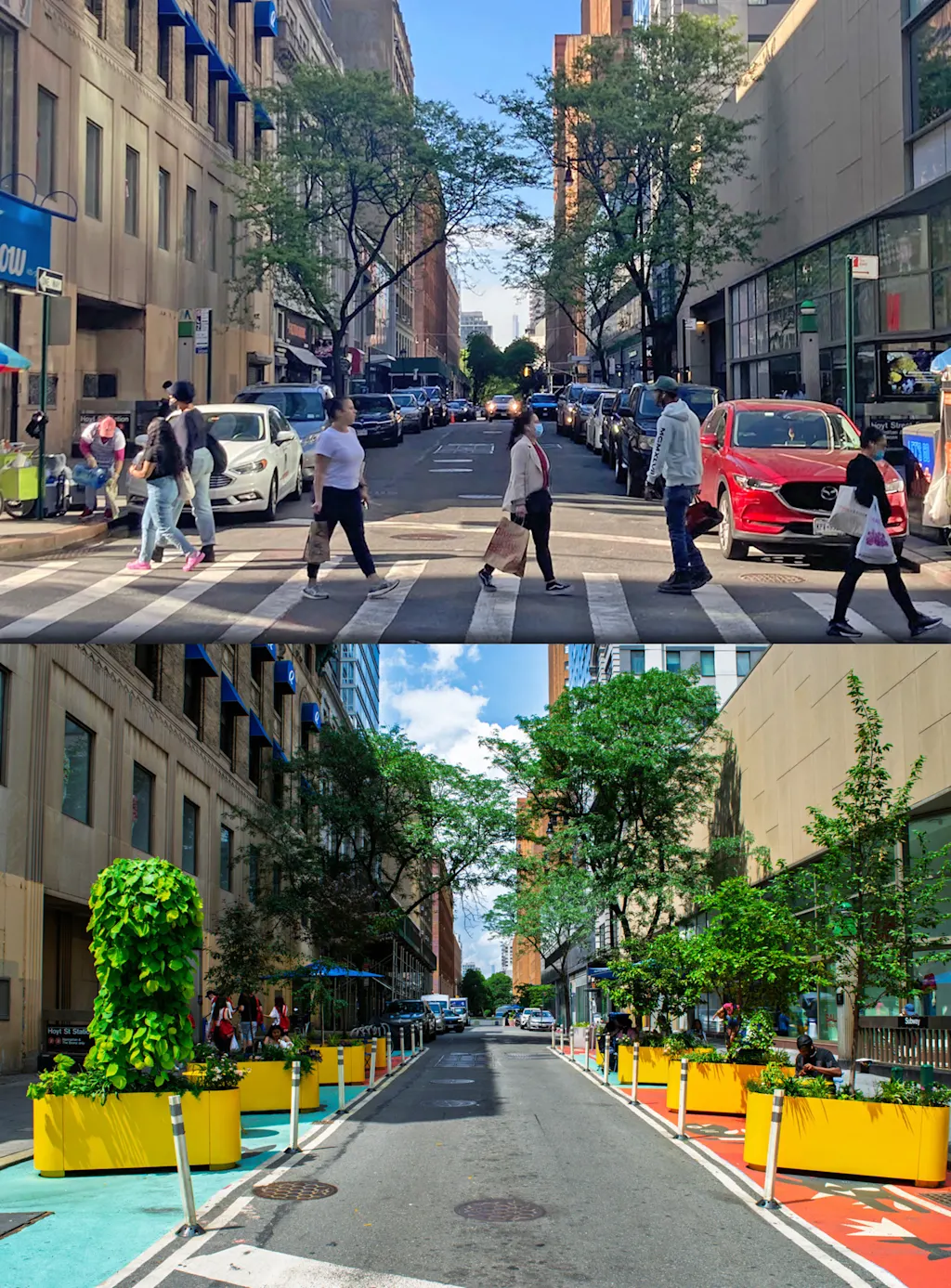
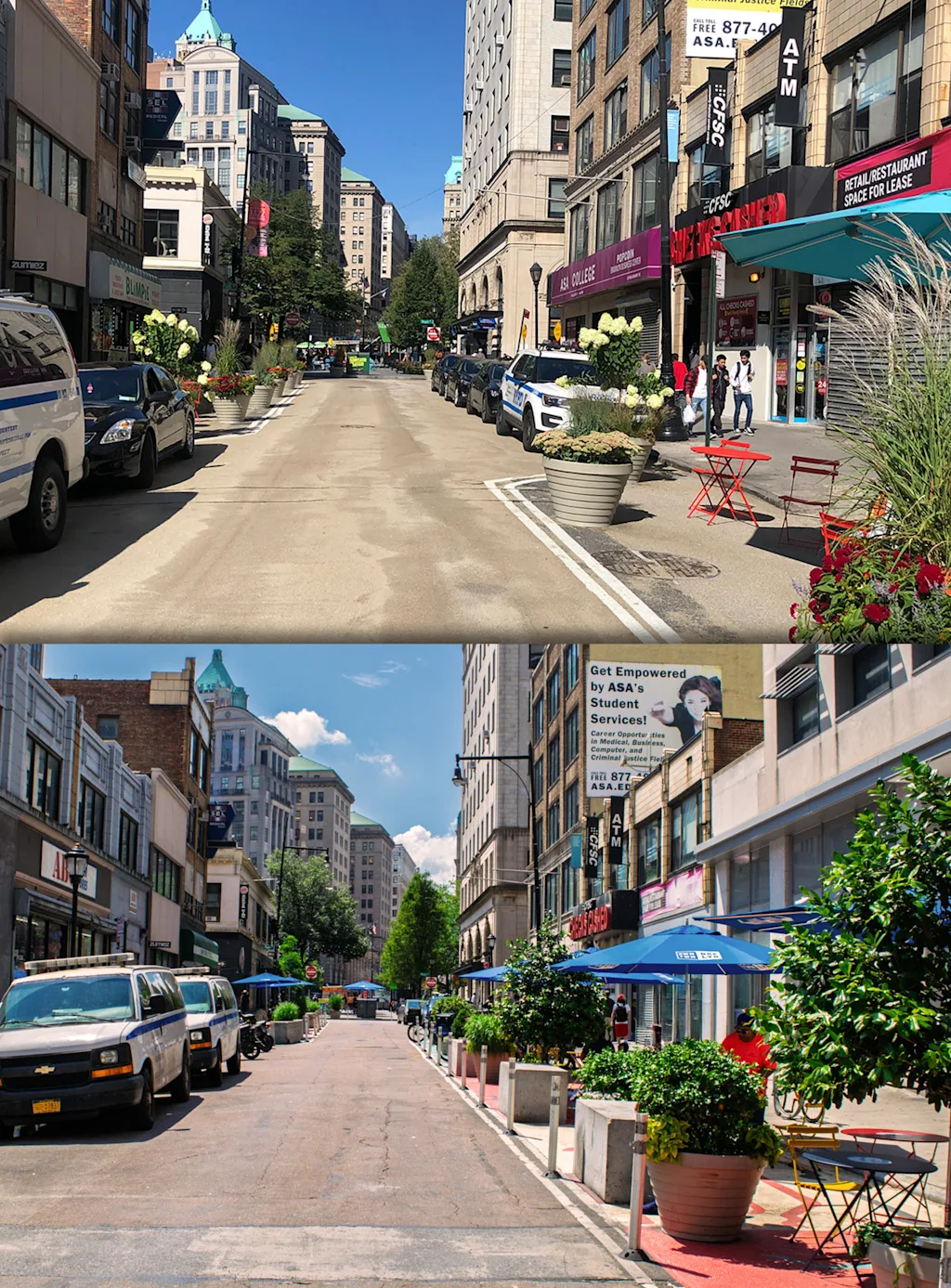
Now, after seven years of planning and prototypes, the designs have been fully installed. As these before-and-after images show, the transformation has been dramatic.
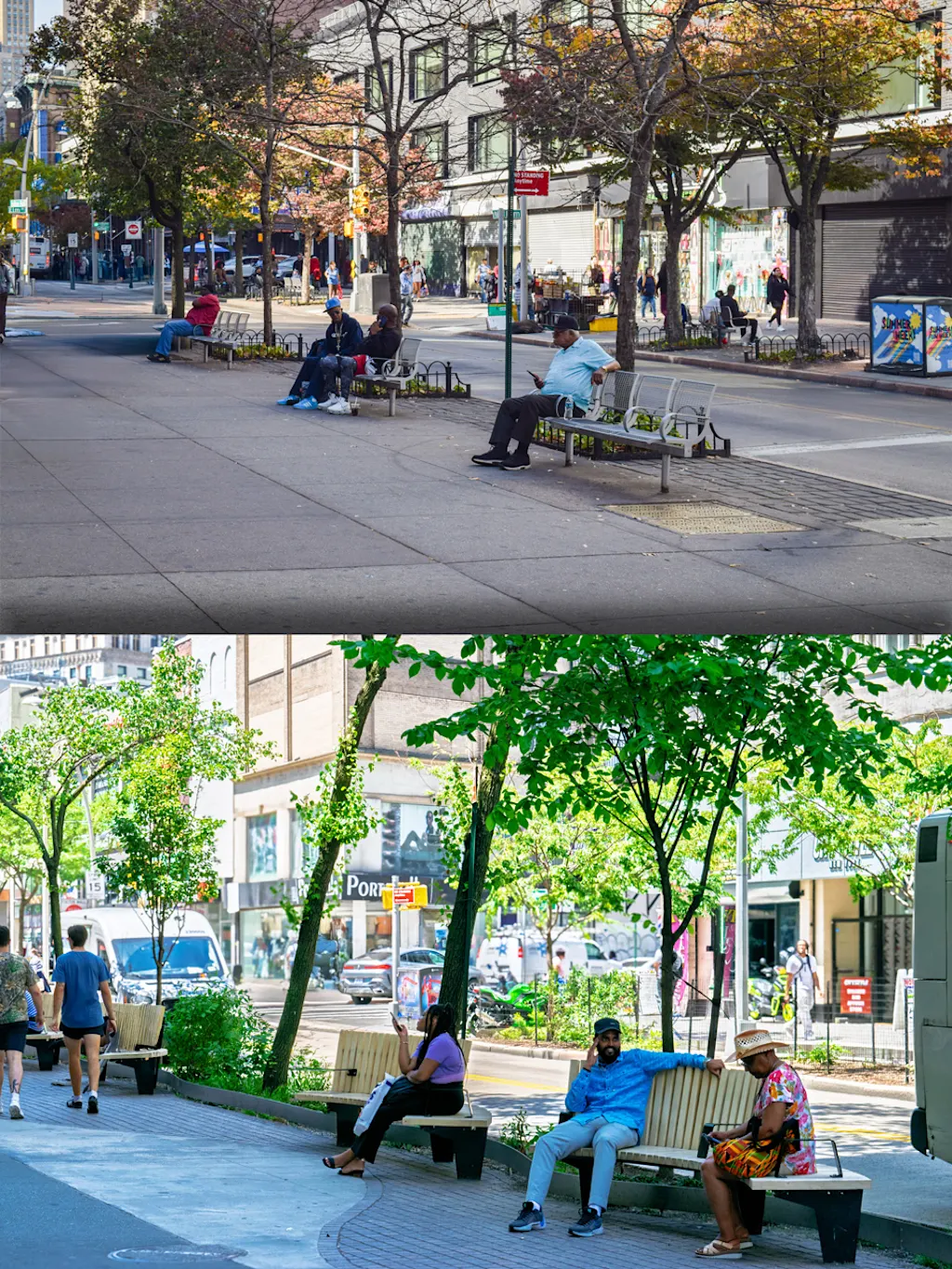
The formerly congested streets of downtown Brooklyn have been augmented with planters, bollards, street bistro seating, and other traffic calming measures, as well as increased greenery and public open space. Redesigned tree pits add a larger and more refined space for street trees to grow, and curving benches follow cobblestone paving that hugs the edge of the sidewalk. Compare to the preexisting street furniture, which Myer calls “mean,” the new spaces invite pedestrians to sit and experience the city around them.
Prototyping public space
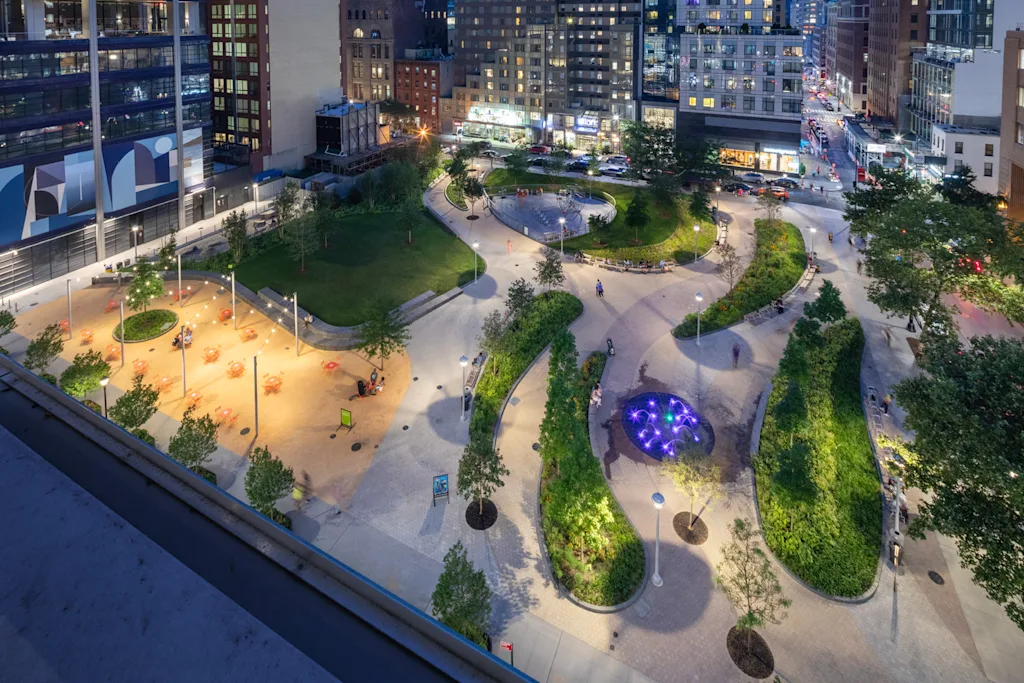
This work came about incrementally at first. WXY and BIG’s design guidance was first tested on the streetscape outside a Studio Gang-designed residential tower that was completed in 2021. Working with the city’s Department of Transportation during the project’s mid-pandemic construction, DBP convinced the city to allow sidewalks on two sides of the building to be widened to make space for these new streetscape amenities as an experimental pilot project. The resulting streetscape sparked a desire for other, more officially sanctioned improvements.
A second pilot project was then built outside the city’s first all-electric skyscraper, and officials were fully on board. “They liked it so much that they actually asked us to go through the [Public Design Commission] process for a plan for the entire neighborhood,” Myer says, referring to the path for making improvements to public and civic spaces in the city.
This work led to the 2021 release of a Public Realm Action Plan covering more than 40 blocks in the area. In 2023, the mayor’s office dedicated $40 million in funding to put the plan into action. “The prototyping process really worked for us,” Myer says.
And in the four years since the plan was released—relative light speed in the realm of public space projects—it has materialized on sidewalks and shared streets across downtown Brooklyn. Bright yellow planters now sit in the spaces where cars once parked, carving out niches for outdoor seating and dining. Teardrop-shaped tree planters add flourish to the edges of sidewalks where trash once gathered. Swooping benches teem with life along streets packed with an increasing mix of uses.
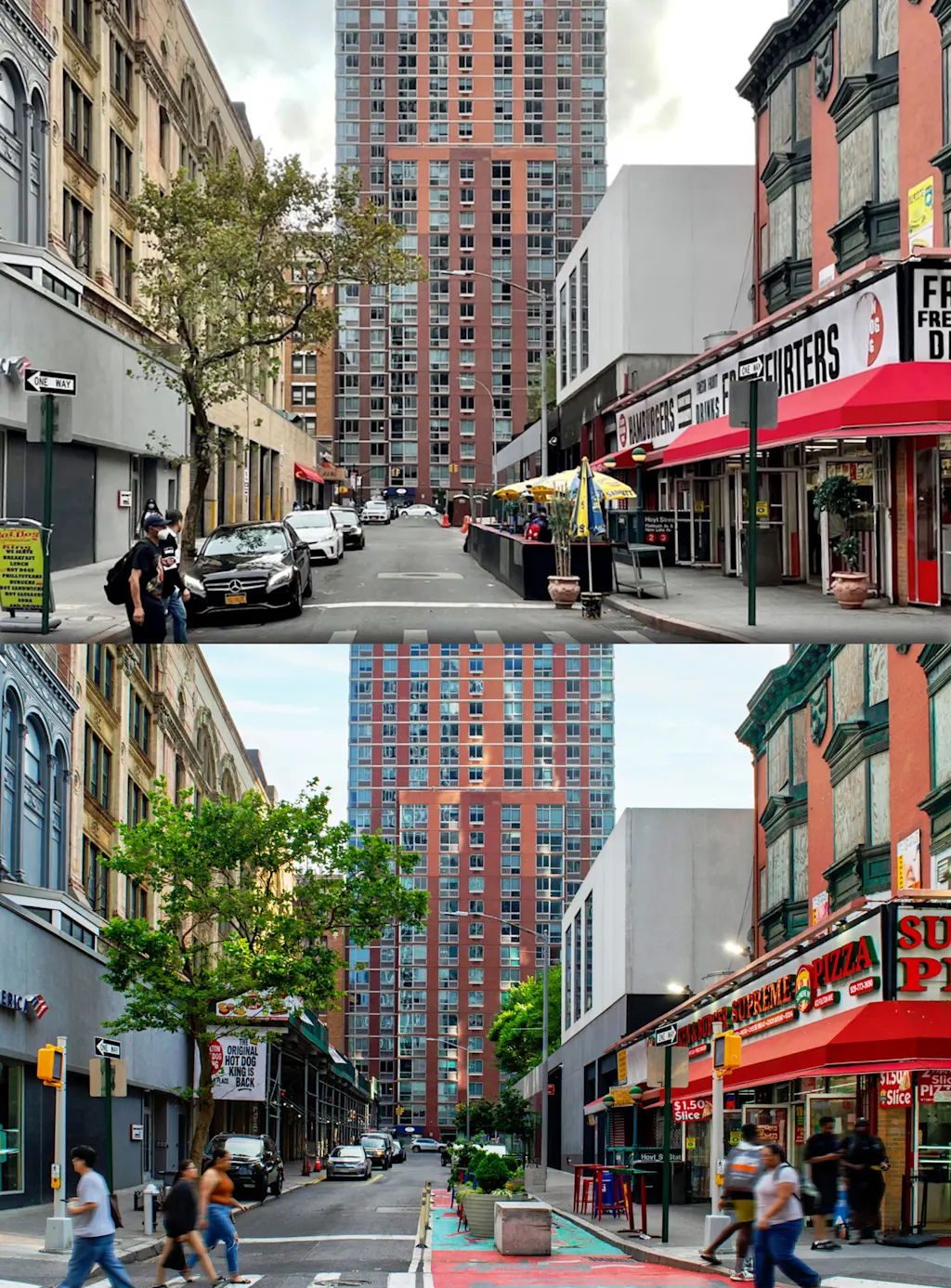
This could be just the start of a broader transformation in the area. WXY and BIG’s design has now become a system that developers can use to improve the streetscape of future projects. Myer says the plan was strategically minimal in its proposed interventions. The redesign requires little large-scale construction, utilizing existing street poles, for example, and making the most of the existing width of the sidewalk. Aside from the two pilot projects, no other sidewalks were extended, “because you know how gnarly that can get,” Myer says.
The plan has sailed through approvals and construction, and downtown Brooklyn’s streetscapes are almost unrecognizable from what they looked like just a few years ago. Myer calls it an effort that appeals across the spectrum, from business owners to building tenants to the growing residential population to visitors and tourists. “What we really were seeking here was to use our existing space better for people,” she says.
source https://www.fastcompany.com/91454369/this-busy-nyc-neighborhood-just-got-way-more-walkable
Discover more from The Veteran-Owned Business Blog
Subscribe to get the latest posts sent to your email.

You must be logged in to post a comment.