We’re at a rare inflection point. Robots are moving from research labs and factory floors into everyday life. Right now, they’re being dropped into human spaces and, often, missing the mark. Yet embodied AI is becoming more intelligent, manipulation more capable, and perception more attuned. These shifts are giving robotics a new expressive range, the ability to move, interact, and take shape in ways that feel natural in human environments. It’s a moment full of possibility.
Currently, people see robots as humanoid helpers or robotic arms, but we don’t have to be limited to these. They represent only a small slice of a much broader category of intelligent and autonomous physical systems, which are starting to show up across hotels, operating rooms, and beyond. Together, they make up an emerging landscape where many meaningful use cases haven’t yet been defined. Though they’ll share capabilities around intelligence and automation, each will need a distinct format that expresses its promise.
All these use cases will require different robotic formats. What connects them is the need to fit and belong in human spaces. And not just physically fit, being able to navigate spatial and material complexities, but fit into the inherent social constructs these spaces embody. We need systems that move with the grain of human life, make people comfortable with their presence, and offer moments of surprise, delight, and personality. These are the kinds of systems we deserve, systems that let us engage with emerging technologies in ways that preserve our humanity.
DESIGN FOR HUMAN SPACES
Every human space is a system of invisible rules. We rarely think about them, but we follow them intuitively. They govern how we navigate, how we share space, and what feels acceptable or intrusive. Together they form culture.
The home is a great place to begin understanding what it means to design robotic systems for human spaces because the lessons learned extend to other spaces, like hospitals, airports, and back-of-house environments.
Home is one of the most complex human systems, full of rituals and meaning. Movement is deliberate and human-paced. At home, we adjust our speed without thinking, respond to subtle cues, and act in rhythm with others. Interaction is continuous, a fluid exchange of words, gestures, and glances. Trust is built gradually, through consistency and reliability.
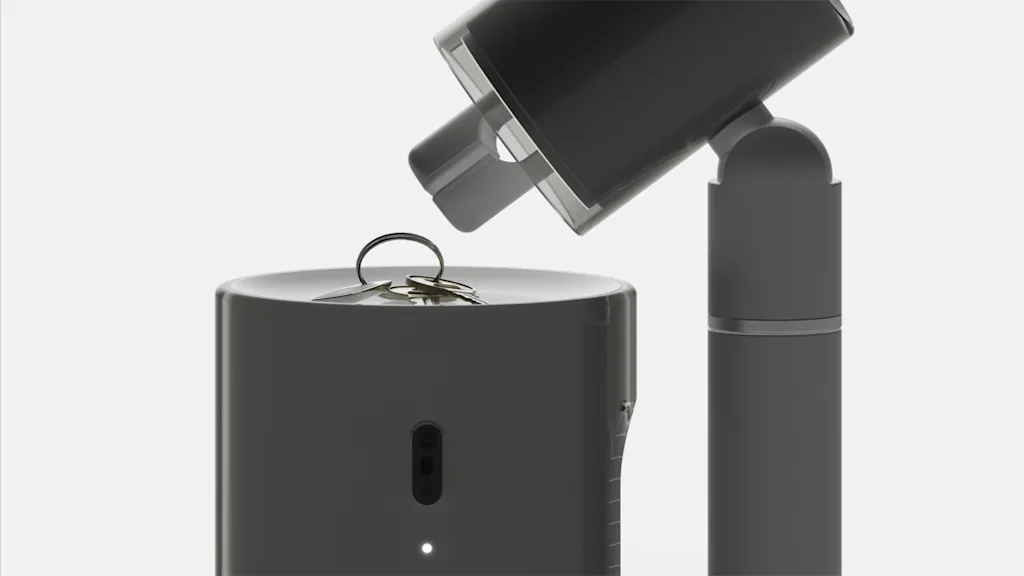
A robotic system entering a home must be designed with this context in mind. Our team has been developing a concept for a robot designed to keep the home in rhythm. Its body draws from familiar domestic archetypes, somewhere between furniture and appliance, so it feels native. A single arm at counter height allows it to take part in most daily routines, tidying, setting a table, and lending a hand where needed. Ultimately, the goal is to create a robot that follows the flow of home life. Their presence must be clear in intent, socially aware in behavior, and gentle enough to support home life without ever intruding on it.
The same goal is true as we design robotics for other human domains. The challenge is to let go of our preconceived notions about technology and reflect on the context we’re entering by asking:
- What human patterns are at play?
- How do people move, communicate, and collaborate within them?
- What physical and social contexts shape our routines and expectations?
From there, form, motion, behavior, personality, and interaction paradigms can be designed to reflect the domestic, civic, industrial, or social environment they inhabit. A restaurant kitchen, a factory, or a city street each has its own tempo, spatial grammar, and expectations of grace.
Design that reads those cues and responds in kind builds trust; design that ignores them breaks it. Robots and other intelligent systems that respect these invisible rules will be accepted, while those that overlook them will feel out of place. Designing for context ensures these technologies feel like they belong in human spaces.
HOW TO SHAPE THE NEXT INTERFACE
As intelligence extends beyond screens and into the world around us, design grounded in people and context will make these technologies feel like they belong in human spaces. While we’re solving the technical hurdles, we also have a chance to define how these systems live among us.
The prototypes and interaction models we create today will become the foundations others build upon, eventually solidifying into platforms, patterns, and conventions. They will shape not only how these systems look and act, but also our own behaviors and expectations—what we call culture.
Because of that, these first design moments matter. The exciting thing is that we are still at the beginning. The frameworks and languages of robotics and other intelligent systems are in flux, giving us a rare opportunity to design without inherited norms. While we’re sharing how we can break paradigms in the home, this same approach can be used across contexts to frame new formats and use cases.
In this moment, we are effectively writing the DNA for how intelligent systems will coexist with people. It is an incredible moment to shape the next chapter of human experience and ensure it’s one worth living with.
Inna Lobel is the head of industrial design at frog.
Thanks to my colleagues Katie Lim and Tom Frejowski for their collaboration and contributions to this work.
source https://www.fastcompany.com/91464905/writing-the-dna-of-robotics
Discover more from The Veteran-Owned Business Blog
Subscribe to get the latest posts sent to your email.

You must be logged in to post a comment.