Apple and Google would like to see your identification, please.
With the former’s “Digital ID” launch last week, both companies now let you scan a digital version of your passport at more than 250 Transportation Security Administration checkpoints, using an iPhone or Android phone. A growing number of U.S. states already support digital driver’s licenses for the same purpose.
But the push for these digital IDs isn’t merely about airport security (which still requires you to carry a physical license or passport anyway). It’s really part of a broader effort to verify who you are online, one that can finally start in earnest with passport-based digital IDs that are available nationwide.
This story first appeared in Advisorator, Jared’s weekly tech advice newsletter. Sign up to get more insights every Tuesday.
How it works
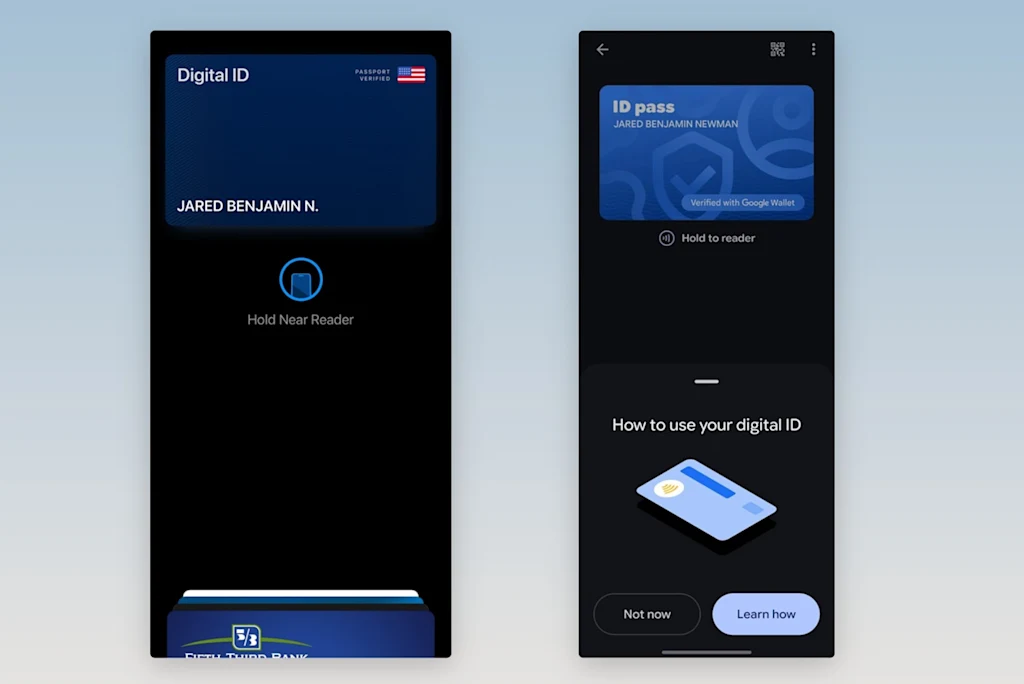
Apple and Google have similar processes for digitizing a license or passport:
- Open the Apple Wallet (iPhone) or Google Wallet (Android) app.
- Hit the + button and select the “ID” option.
- Scan your ID’s main page with your phone’s camera.
- Scan the back of your license, or place your phone on top of your passport’s barcode page to scan the embedded RFID chip.
- Submit a photo of your face.
- Capture one or more short videos of your face performing some kind of movement. (This is presumably to prevent someone from digitizing your ID without permission.)
After a brief verification period, you’ll be able to access your ID through your phone’s digital wallet screen, the same place you’d use Apple Pay or Google Pay.
While digital passports are available nationwide, support for digital driver’s licenses or state IDs varies. Apple and Google currently let you digitize a license from Arizona, Arkansas, California, Colorado, Georgia, Iowa, Maryland, Montana, New Mexico, North Dakota, and Puerto Rico. Apple’s system also works in Hawaii and Ohio. A smaller number of states maintain their own digital ID apps, either in addition to or instead of Apple’s and Google’s versions, as listed on the TSA website.
Scanning a license or passport doesn’t mean you can leave the print version at home. The TSA may still want to see the real thing, and passport control agencies won’t accept the digital version when you cross the border.
Moreover, digital ID support will be spotty outside of airports. While some states have been encouraging bars, restaurants, and other businesses to accept digital IDs, the merchant needs a phone or other identity-reader hardware for that. Much like in the early days of Apple Pay and Google Pay, trying to use your digital ID probably won’t be worth the potential weird looks and awkwardness.
So what’s the point?
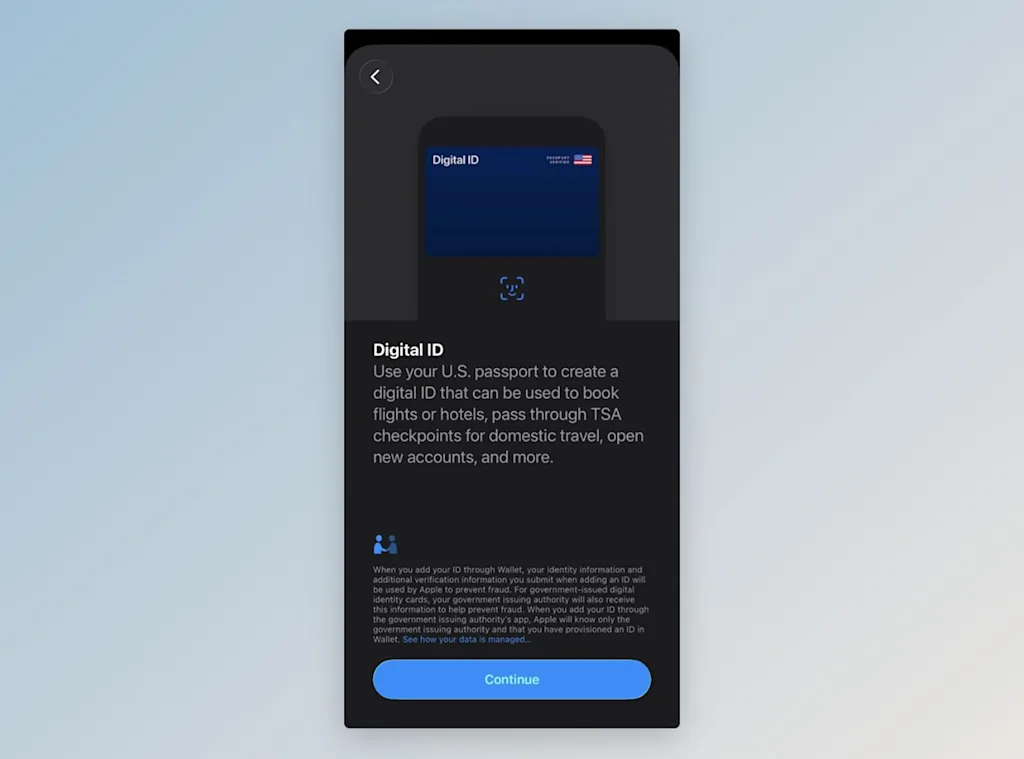
Apple and Google both have bigger plans for digital IDs beyond just a slightly more seamless TSA process.
Apple’s Digital ID setup page, for instance, says it’ll eventually work while booking flights or hotels and opening new online accounts. Google is more specific, saying its digital ID will let you recover an Amazon account if you’re locked out, log into health portals such as CVS Health and Epic’s MyChart, and verify your profile with companies like Uber. Some states that have enacted age verification laws for porn sites have started accepting digital IDs as well.
Therein lies the true endgame with these digital IDs: The point isn’t really to replace physical IDs in the real world, but to verify your identity in the digital one. You can easily imagine a future in which a digital passport lives alongside or even replaces traditional passwords as a way to prove who you are online, with a verification process that feels a lot like checking out with Apple Pay.
This obviously introduces some new concerns. The convenience of digital IDs could also become an excuse to gate off large swaths of the internet, so you might need ID to visit a local brewery’s website, rent an R-rated digital movie, or access sites with social features of any kind.
And while Apple and Google tout the ability to keep your personal details private—for instance, by sharing just your age with a website without revealing your name or address—that assumes the companies asking for your ID won’t request or store more details than they need. Combined with broader use of digital IDs, this could make it a lot harder to browse the internet anonymously.
A lot of this is still theoretical, but it seems to be the future we’re headed toward. So be aware of what Apple and Google are really asking for when they encourage you to create a digital ID. In the long run it’s about a lot more than getting through the airport.
This story first appeared in Advisorator, Jared’s weekly tech advice newsletter. Sign up to get more insights every Tuesday.
source https://www.fastcompany.com/91463316/apple-google-digital-id-passport-tsa
Discover more from The Veteran-Owned Business Blog
Subscribe to get the latest posts sent to your email.

You must be logged in to post a comment.