In a parking lot in Detroit next to the Henry Ford Museum, three streetlights now double as EV chargers.
The site is one of the first installations of the Voltpost Air, a device that taps into existing infrastructure to quickly add charging capability at the side of the road or in parking lots.
The approach is simpler than adding stand-alone EV chargers: Installation takes just a few hours. “We don’t have to do costly utility upgrades to the grid in order to this,” says Jeff Prosserman, cofounder and CEO of Voltpost. “We’re just finding pockets where power already exists and then making it work.”
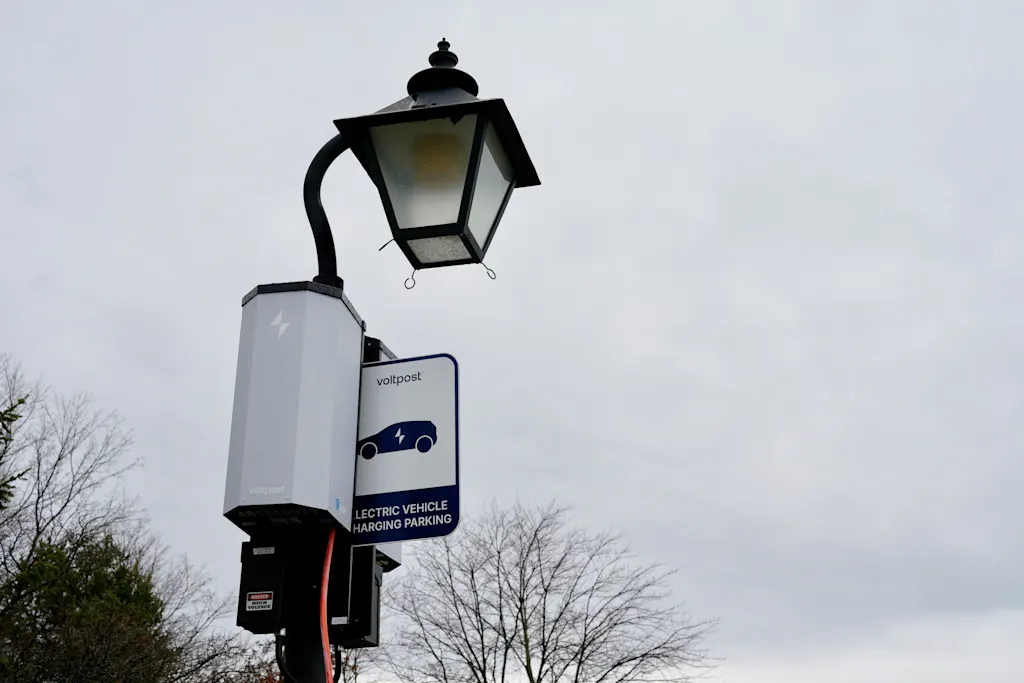
That’s possible partly because the chargers are Level 2, meaning they charge more slowly than others and don’t need large amounts of power. Slower charging is still useful for the target customers—apartment dwellers or others who don’t have a garage where they can easily charge at home, but who may park in the same spot next to streetlights during the day for hours at a time.
Installing conventional EV chargers often involves much more work. “You would rip up the sidewalk, you rip up the street, and then you’d lay down new wire, and basically that would be a very large expense to repair effectively,” Prosserman says.
Instead of digging up the road to install new conduit, Voltpost checks to see whether those conduits have spare capacity under electrical code. Then they open up existing access points and pull a single bundled power cable through. If power is overhead, the cable can drop down the pole from above.
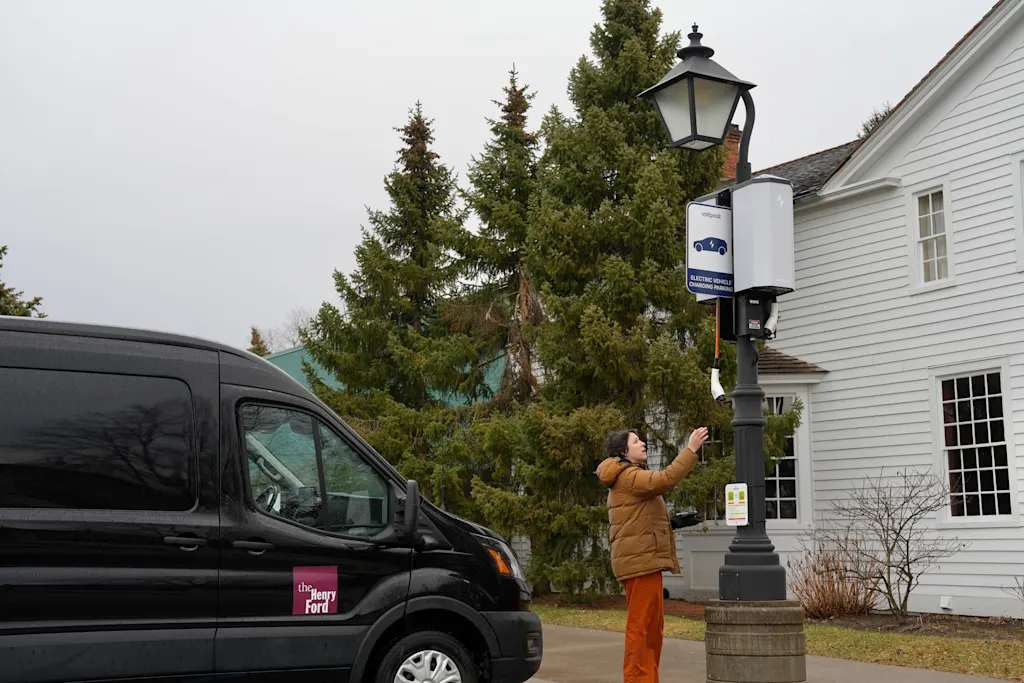
The chargers are mounted about 10 feet above the ground. (In the case of the new installation in Detroit, each streetlight has two charging connectors; in other cases there might be one per pole.) Drivers access the charger with an app or by tapping a credit card, and then push a button to extend the charging cable up to 25 feet to their car. Once charging is complete, the cable automatically recoils inside, protecting the hardware from vandalism or rough weather.
The company partnered with AT&T to add connectivity to the devices for remote diagnostics, firmware updates, and performance monitoring so drivers know that the charger is working before they arrive. AT&T is also exploring the possible use of the same poles and conduit for telecom gear like 5G or fiber alongside the chargers, stacking infrastructure to cut costs for both.
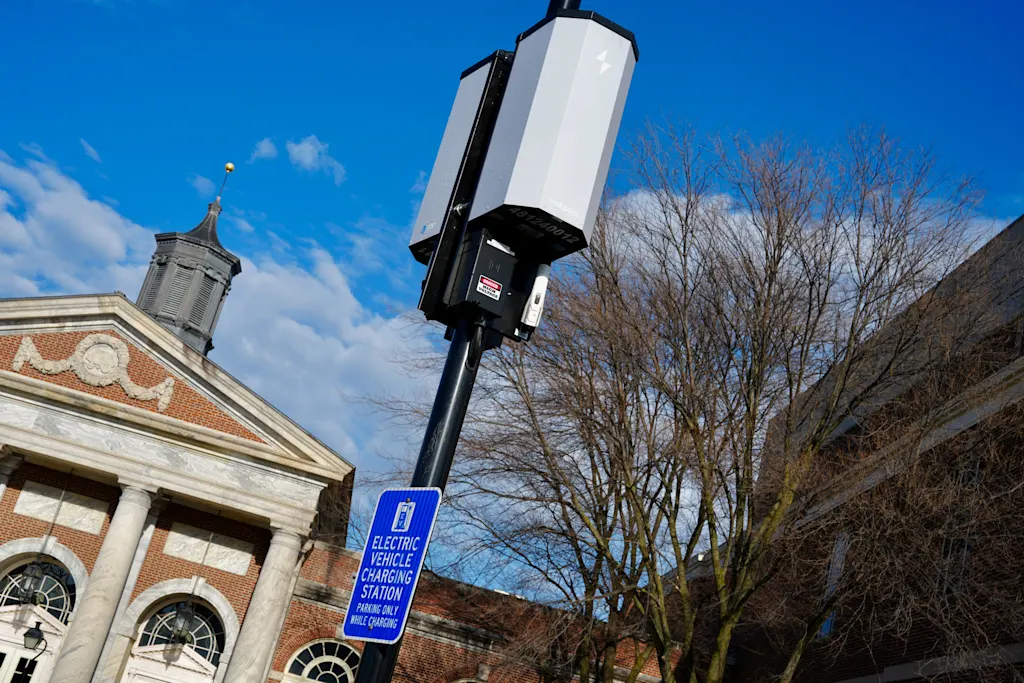
Voltpost now has hundreds of new chargers in its pipeline, including many more in Michigan, where the state’s Office of Future Mobility and Electrification and DTE’s Emerging Tech Fund are helping fund the rollout. More funding is likely to come from the federal government, despite the Trump administration’s efforts to roll it back. Trump froze funds for the National Electric Vehicle Infrastructure (NEVI) charger program a year ago, but courts blocked the move. The money goes first to high-speed chargers, but states that have built out a network of those chargers can also use the money to install Level 2 chargers like Voltpost’s.
Around 820,000 new Level 2 EV chargers will be needed by 2030, according to an estimate from the International Council on Clean Transportation. (That many are needed even without the federal EV incentives that were cut last year.) Retrofitting streetlights could be one of the fastest ways to fill that gap.
source https://www.fastcompany.com/91473312/detroits-streetlights-are-becoming-ev-chargers
Discover more from The Veteran-Owned Business Blog
Subscribe to get the latest posts sent to your email.

You must be logged in to post a comment.