AI Works Best as a Teammate, Not a Tool written by John Jantsch read more at Duct Tape Marketing
Catch the full episode:
Episode Overview
In this episode of the Duct Tape Marketing Podcast, John Jantsch speaks with Lauren Esposito, Chief Marketing Officer at Asymbl. They explore how the meaning of “hybrid workforce” has changed in the age of AI, why digital labor should be treated like human teammates, and what organizational shifts are necessary to succeed in the future of work.
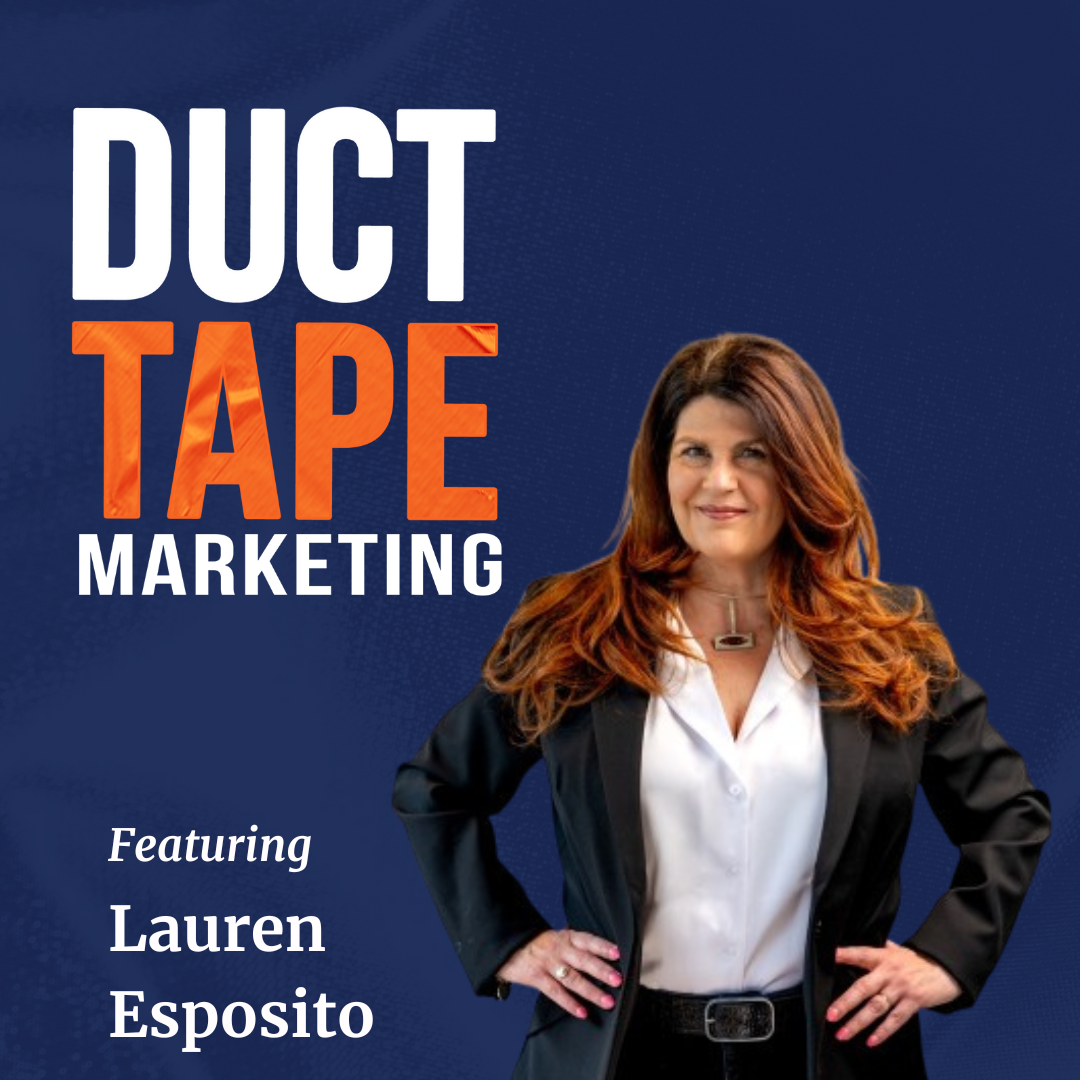 Guest Bio – Lauren Esposito
Lauren Esposito is the Chief Marketing Officer at Asymbl, a workforce orchestration company helping businesses scale hybrid teams made of human and digital labor. Previously, she led global brand and media strategy at Salesforce and holds an MBA from Butler University.
Key Takeaways
- Hybrid Workforce Redefined: AI-powered digital workers are now part of the team—not just tools.
- Digital Labor as Teammates: To get ROI, organizations must manage and coach digital workers like employees.
- Organizational Shift: Success requires business and IT collaboration; leaders must take ownership of AI implementation.
- Start Small: Begin where you already use tech, then scale use cases as trust and understanding grow.
- Customer Trust Matters: Automations must reduce friction and preserve human connection options.
Great Moments (Time-Stamped)
- 00:43 – Asymbl’s mission: hybrid workforces with human + digital talent
- 01:35 – Rethinking what “hybrid” means in the age of AI
- 03:32 – The balance between fear and opportunity with AI
- 05:41 – Why business leaders must own AI success
- 10:27 – How to start implementing digital workers without disruption
- 13:41 – Marketing digital labor to stakeholders and customers
- 16:47 – Siloed data and the road to autonomous agents
- 19:51 – Predicting the future of hiring and hybrid teams
Quotes
“When treated like part of your team, digital labor delivers more ROI than just using AI tools.”
“Start small. You don’t have to redesign everything—just get one job off your plate and build from there.”
Connect with Lauren Esposito and Assemble
Website: Asymbl LinkedIn: Lauren Esposito
John Jantsch (00:01.421)
Hello and welcome to another episode of the Duct Tape Marketing Podcast. This is John Jantsch and my guest today is Lauren Esposito. She’s a chief marketing officer at Asymbl, a leading global marketing strategies to drive brand growth. Before Assemble, she spent over a decade at Salesforce in senior leadership roles, including vice president of global brands and media and shaping brand strategy and audience engagement. Lauren holds an MBA from Butler University and combines strategic leadership with creative execution.
Elevator symbols market position. So, Lauren, welcome to the show.
Lauren Esposito (00:36.462)
Thank you, John. Excited to be here.
John Jantsch (00:38.367)
So I guess we ought to say you don’t have to give the full pitch, but let’s set the table. What’s a simple
Lauren Esposito (00:43.682)
Yeah, absolutely. So Assemble is a workforce orchestration company. And we bring together recruiting technology so you can hire your human workers, a digital labor advisory practice so you can onboard digital workers alongside them, and then really strong platform and technology expertise that brings it all together. And so essentially, we’re here to help businesses design, manage, and scale a hybrid workforce of both human and digital workers to drive more meaningful business impact.
John Jantsch (01:11.639)
You’ve practiced that. That was brilliant. So let’s, I’m glad you mentioned hybrid workforce, because that was going to be my first question. Pre-pandemic, maybe even somewhat before that, a hybrid workforce was some that worked from home and some that worked in the office. So how has that completely changed in the age of AI? The term hybrid workforce means something different now, doesn’t
Lauren Esposito (01:35.434)
Yes, definitely it does. mean, technology has been around for quite some time now, as well as our globalization and ability to work from anywhere. In this new frame, we kind of realized this term had new meaning in going through the AI explosion ourselves, right? As a small business with high growth, we were trying to implement a lot of these tools and technologies and agentic solutions.
And like many of us, we’re struggling with that. And we had a big aha moment when we realized it’s not just a tool or a piece of technology. If we think about this as a worker, like another part of our team, just like we would a new hire or an employee, we got so much more value and ROI out of it. So for us, that’s how we’re thinking about hybrid workforces too now. And so your digital labor.
John Jantsch (02:13.283)
Mm-hmm.
Lauren Esposito (02:25.868)
as a part of your workforce. It’s yes, the tools and technology, but it’s the way you implement and orchestrate that knowledge, that intelligence, that memory to get work done in the places you are.
John Jantsch (02:37.461)
Yeah, I see so many people that originally kind of latched onto AI tools as like, here’s just, here’s another tool to do things faster. And all they really were doing was moving one set of tactics to another bucket, so to speak. And in some cases working harder than ever, you know, rather than getting the efficiencies. So, you know, a lot of the talk around AI, you’re calling them digital workers, but you know, lot of people are still very much about, AI is going to replace people. And there’s a real risk and there’s a real fear. In fact, I
I read an article recently that said something like 93 % of workers use AI today and only about 27 % of them are admitting it. You know, because I think there’s this real fear that that’s going to wipe out the company. So you as somebody that’s trying to help people balance both of those, I mean, you’re bringing digital workers to places where humans work today. So how do you kind of balance that with, hey, this is going to be OK?
Lauren Esposito (03:32.407)
No, it’s a great question. I mean, full transparency had some of the similar feelings and thoughts myself. What I have experienced firsthand, though, I think is there are so many different AI solutions and tools offering features and functionality out there. And in these siloed ways, they’re far, far from replacing us, in my opinion, because
you know, humans are still very relational and the way that we transact still requires, right? Like strategic thinking, creative innovation, relationships, right? We’ve been promising in marketing for how long, you know, right message at the right time and the right channel. And we’re still hardly, you know what I mean? Delivering on that in a one-to-one way. And while I do think AI again, takes us a step closer to that, you know, it doesn’t speak with
emotion and empathy and compassion. doesn’t meet us, you know, from a design perspective there. So we really see it as a tool that’s elevating, you know, humans and employees into doing things that it feels more meaningful. I don’t have to be bogged down, you know, in data and in deep analysis or, you know, my research process can be elevated or some automations can be more trusted.
But there’s still a requirement for me to participate. And in this hybrid ecosystem, it really puts accountability on you as an individual to say, I’m going to build a digital worker to be a part of this team, just like I would an employee, I’m going to review, meet, coach, manage that individual, that worker. And so there’s really an intricate relationship in what we’ve seen that companies are getting success out of it. It can’t be a set it and forget it.
And AI can just do it on its own and it’s going to take over and replace us. Now, who’s to say where the technology goes and what that unlocks and the impact? Of course, there’s impact with any evolution, right, that we go through. But I’m choosing to remain an optimist in this one.
John Jantsch (05:41.781)
So if we’re gonna move from robots to teammates, which is what you’re suggesting, do there have to be some pretty big organizational shifts to make that real? I culturally, operationally, you’re gonna have a 30 minute one-on-one with your digital coworker. mean, how do organizations have to change to actually get a new mindset?
Lauren Esposito (05:44.674)
Hmm
Lauren Esposito (06:05.398)
I think it’s the best question you could have asked. Right now, a lot of organizations are seeing like, okay, it’s another tool of technology. My IT team is going to decide what right tools and technology are potentially the best for me, approve it, implement it, and set it up for me. The reality though is those configurations, implementations of those tools don’t often result in like really meaningful impact.
I’m sure you can get an outline or research, right? But they’re not really taking over jobs to be done and full outputs because it doesn’t have the memory and the context. So the biggest change is business leaders and right coming to the table to be a partner with IT and take accountability for the success of the AI. And what that means is, my IT department, you know, we just launched an SDR agent, you know, a couple months ago to help us right with our sales capacity. Our IT team.
didn’t have the experience to understand what a human SDR goes through, right, to drive high quality engagement and get results back. They needed us to come to the table and psychologically kind of map that out so that we could then say, well, what needs to be documented? What information? Where do we want to engage with that? You know, it’s not just in our CRM system, which is Salesforce. We also wanted to be notified in Slack when our SDR was closing the lead, right? Just like the rest of our sales team engages. So it’s thinking, you know, what,
What knowledge and information do they need? Where in the flow of work, right? Are they going to operate? And then yeah, you do need ongoing coaching. So that’s why we keep talking about as a part of your workforce strategy, because you’re, know, human employees don’t perform on day one. So you probably can’t expect your right digital workers to do that either. And it takes time to understand what you’ve provided to them. What are they capable of doing and not doing what
John Jantsch (07:45.591)
Yeah.
Lauren Esposito (07:55.734)
additional coaching and feedback might they need? What other information sources might they need to be connected to and so on? So we do have one-to-ones with our digital workers every week reviewing that output and optimization that we can feedback. But the cultural change for me was really when business leaders came to the table and realized like they’re fully responsible for this and IT is their partner and not the other way around.
John Jantsch (08:20.929)
Yeah, yeah, I’ve seen many people advise to don’t stick AI adoption in IT, you know, and forget it and say they’re gonna, you because it just won’t, it won’t work. On that same similar point, at least, I think a lot of people think, okay, I have a function to be done, I’m going to hire somebody for that, here’s going to be their job description. You know, okay, great, it’s gonna be a digital person, but you know, here’s the job description. So
Do they have to actually, do you believe that there needs to be different conversations about how work actually gets done? Who’s doing what? How roles are divided? This may be totally different than what we’ve done before because we’re dealing with a whole different flow and process.
Lauren Esposito (09:06.253)
Yeah, I mean, we’re so new to it that I think absolutely as we continue to iterate and learn and every business is different, right? We could all be using the same tools, but we still maintain competitive advantages because of the way we get work done, right? And the way that we think about our processes or the information and the individuality and uniqueness, right? That those employees bring. So similarly, you know, we did have to take a step back because
Conversationally, humans can exchange information, retain it, right? And act accordingly. And that’s not how digital workers do. You really have to document that. And that’s a new muscle, right? To really think about, well, how would I take that action? And what did I need to take that action? I needed access. I needed information. I needed maybe an approval, right? What have you. So it really is a reflection, you know, as much of like,
knowledge and information as process and, and efficiency that you want the beauty of it though. Because it does sound like a lot of work and it in upfront, I think it is right, start small, you don’t have to, to resolve your entire workforce and change your entire ways of doing things by any means, right? It’s just saying, hey, if I could get this one job to be done off my plate, it would free me up right to maybe take on some other so start there.
John Jantsch (10:13.027)
Yeah.
Lauren Esposito (10:27.631)
Start with where your technology investments already exist. Almost everyone has an AI application or solution for you. Build around what you know and play with it so you can learn. It’s there that then the aha moments happen and you can start to contextualize how vast this could go and prioritize your biggest use cases to drive value back for the business.
John Jantsch (10:51.619)
And how, I mean, what role does specialization play? Because again, you know, we’ve all worked in organizations where this is your job, but we also need you to take sales calls. And we also need you to design, you know, brochures. we, so now we can actually have five digital workers, right, that are very specialized in doing those tasks. So we have to think about the org chart differently, don’t we?
Lauren Esposito (11:03.918)
Yeah.
Absolutely. Yep. Yeah. There are so many shared, yeah, like actions, you know, across different functions, especially in small business, we all wear many hats.
And we’re kind of working on this idea and philosophy of digital twinning. So we’ve got an entire group of really seasoned and highly experts in our engineering department delivering value for our customers and solving some of their biggest business needs. Well, each of those engineers has different speciality and are called in for different things. So while the foundation of their digital twin
is similar in terms of what access it might have and what task it can perform and what information it has access to. The way they coach and manage it, right, varies. And so it also doesn’t have to be one-to-one. can now, I can partner, right, with my chief revenue officer, for example, on our SDR, you know, digital worker. And we both can kind of feed in.
and then they can expand much more easily and are much more adaptable than our human workforce. Right. So the benefit being, you know, capacity constraints are, you know, not fully removed, but, somewhat. and so you can think about that. Now the limitations I think of AI too, or just as if you’ve ever gone super deep, you know, in one of your chats, the more focused your engagement with a specific tool on a task, right. The more quality comes out of that. And that’s kind of the idea of like.
Lauren Esposito (12:40.735)
you might have to orchestrate multiple tools for different tasks, right, to accumulate what a worker is able to accomplish to drive an outcome. And that’s the, I think that’s a bigger shift than getting too lost in, who manages it and who’s this worker for? It’s really about just the collaboration to say, you know, here’s the outcomes we want to deliver and what, how do we best orchestrate the technology to help us do that?
John Jantsch (13:05.391)
your building’s
Lauren Esposito (13:07.388)
It’s not, you hear that? I’m here in Brooklyn and I live next to the fire department, so.
John Jantsch (13:08.879)
Hahaha
So you hear that multiple times a day, don’t you? So how are companies positioning this idea of hybrid workers as a way that kind of resonates with all the stakeholders
source https://ducttapemarketing.com/ai-works-best-as-a-teammate/
Discover more from The Veteran-Owned Business Blog
Subscribe to get the latest posts sent to your email.

You must be logged in to post a comment.