Less than three months ago, the world watched the Trump administration reduce the White House’s historic East Wing to a pile of rubble to begin construction on a massive new ballroom. But it looks like the dust from that demolition will have barely settled before Trump starts another project to turn the presidential residence into his own personal real estate development endeavor.
This week, Trump and the head architect behind the ballroom construction, Shalom Baranes, revealed several heretofore unknown plans for the nation’s most symbolic building. They include multiple proposals that would add considerable architectural bulk to a White House that’s already set to be burdened by a 90,000-square-foot East Wing (for context, that’s nearly double the square footage of the White House’s main residence).
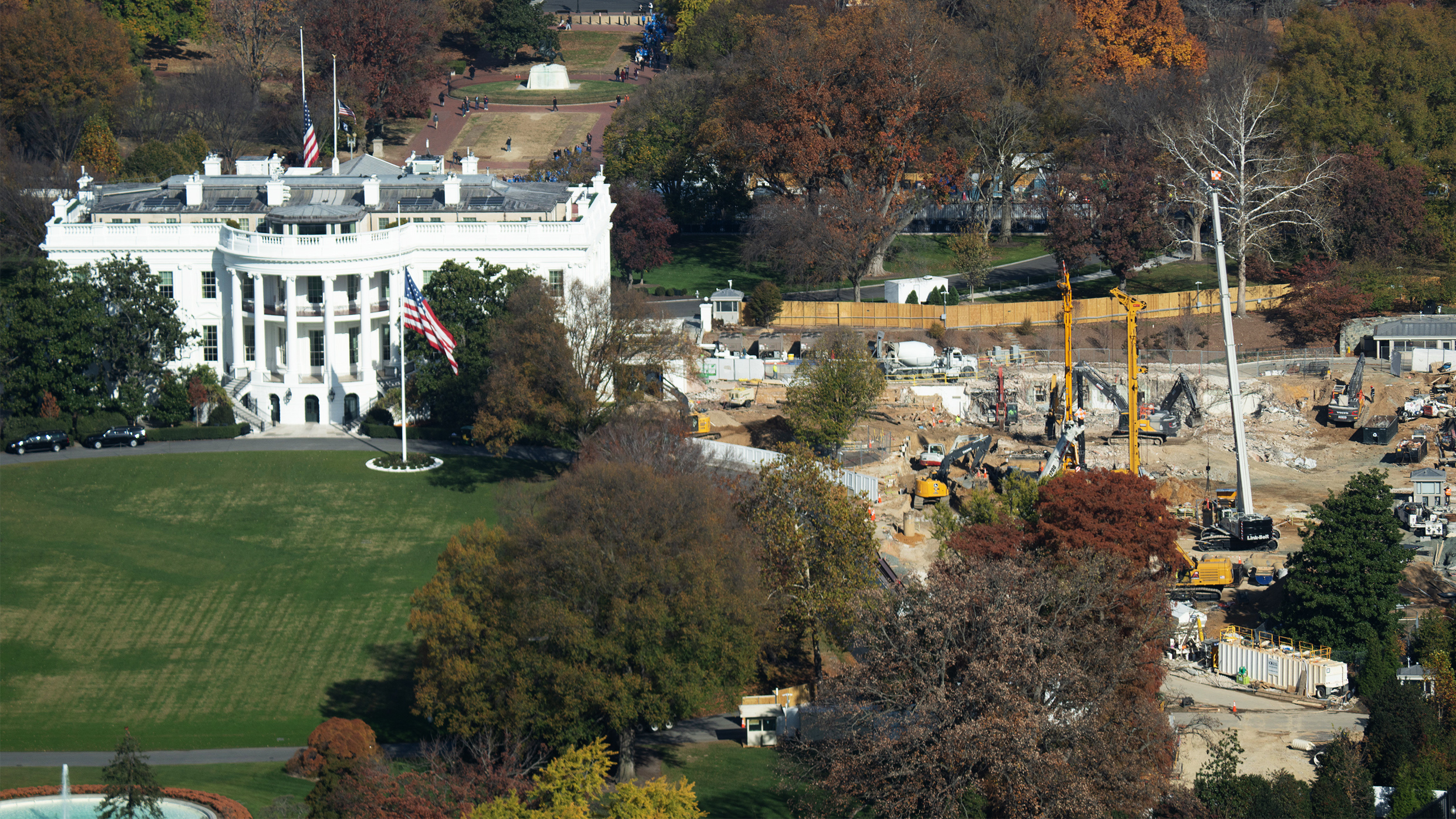
Trump’s ostentatious vision for the White House feels alarmingly similar to the ethos behind America’s suburban monstrosity, the McMansion: Maximizing for square footage by adding a hodge podge of extensions, additions, and flourishes, with no actual regard for architectural sensibility. Here’s everything we know so far about his latest plans.
A new “Upper West Wing”
The most eyebrow-raising aspect of Trump’s latest scheme is to construct what he calls an “Upper West Wing”: an entire additional level on top of the existing colonnade that connects the West Wing to the White House residence.
In an interview with The New York Times on January 7, Trump said this concept was currently in design phases, and proposed that it could serve as “first ladies’ offices for future first ladies”—an ironic proposition, given that he just destroyed the East Wing, which historically served that very purpose.
Baranes added a bit more context to this proposal at a public meeting of the National Capital Planning Commission on January 8. He told attendees that the West Wing addition will “serve to restore a sense of symmetry” to the White House after the East Wing renovation is complete by ensuring that both wings of the building stand at the same height. He did not provide any specific timetable for this new project.
Many experts have pointed out that the 90,000-square-foot East Wing addition will dwarf the rest of the White House by comparison—in fact, that concern is reportedly one main reason that Trump cut ties with the ballroom’s original architect, McCrery Architects, back in December. It seems unlikely that simply slapping more architectural mass onto the White House will offer an elegant solution to this problem.
New details about the East Wing ballroom
At the commission meeting, Baranes also offered a bit more insight into the future of the new East Wing—an addition that Trump has repeatedly demanded be made both bigger and more costly, according to multiple reports.

Baranes told commissioners that the entire East Wing project will encompass 90,000 total square feet, 22,000 of which will be taken up by the ballroom. The ballroom is set to feature towering, 40-foot ceilings, with enough seating to accommodate up to 1,000 seated guests. He added that it will be attached to the White House’s East Room via a two-story colonnade, hence the idea that an added story to the West Wing’s colonnade might help to even things out.
In his interview with The New York Times, Trump also added a bit more color to his ballroom concept, explaining that he sees the space as a secure site to hold a future inauguration, complete with four to five inch thick bulletproof glass.
“It’s being designed very much with the inauguration in mind,” he said. “It’ll be able to hold six times what the Capitol can hold, and it’s all bulletproof glass, drone-proof roof, yeah, serious. The biggest drone could crash into it—you’d hear a noise up there. It wouldn’t be bad.”
Other plans
Trump’s apparent concern with the White House’s security from outside threats was echoed in his plans for Lafayette Park, located just north of the White House. He told The New York Times that he plans to tear up the park’s brick walkways and replace them with granite, in part due to fears that protestors could use the path’s bricks as weapons.
Unlike the ballroom, whose current estimated cost of $400 million is being bankrolled by a hefty list of corporate donors, Trump claimed the park renovation would be self-funded. “I’m spending my own money and I’m going to redo it,” he said of the project’s estimated $10 million price tag.
Discover more from The Veteran-Owned Business Blog
Subscribe to get the latest posts sent to your email.

You must be logged in to post a comment.