Inside Girl Scouts’ headquarters in New York City and its two licensed bakeries, a team of trend forecasters, marketers, and food scientists spend years cooking up its next iconic cookie. Now, fans of the annual cookie sale are about to get a taste of what the Girl Scouts of the USA (GSUSA) team has been baking behind closed doors.
The newest addition to the cookie lineup are Exploremores, a rocky road ice cream-inspired sandwich cookie with chocolate shortbread exteriors and chocolate, marshmallow, and toasted almond-flavored cream centers.
For Girl Scout cookie enjoyers, a fresh cookie is always a welcome surprise. But, according to Wendy Lou, GSUSA’s chief revenue officer and the mastermind behind the nonprofit’s cookie program, the cookie invention process is an intensive project that requires year-round dedication.
“Cookie Season may be once a year, but behind the scenes, the conversation about what’s next is always happening,” Lou says.
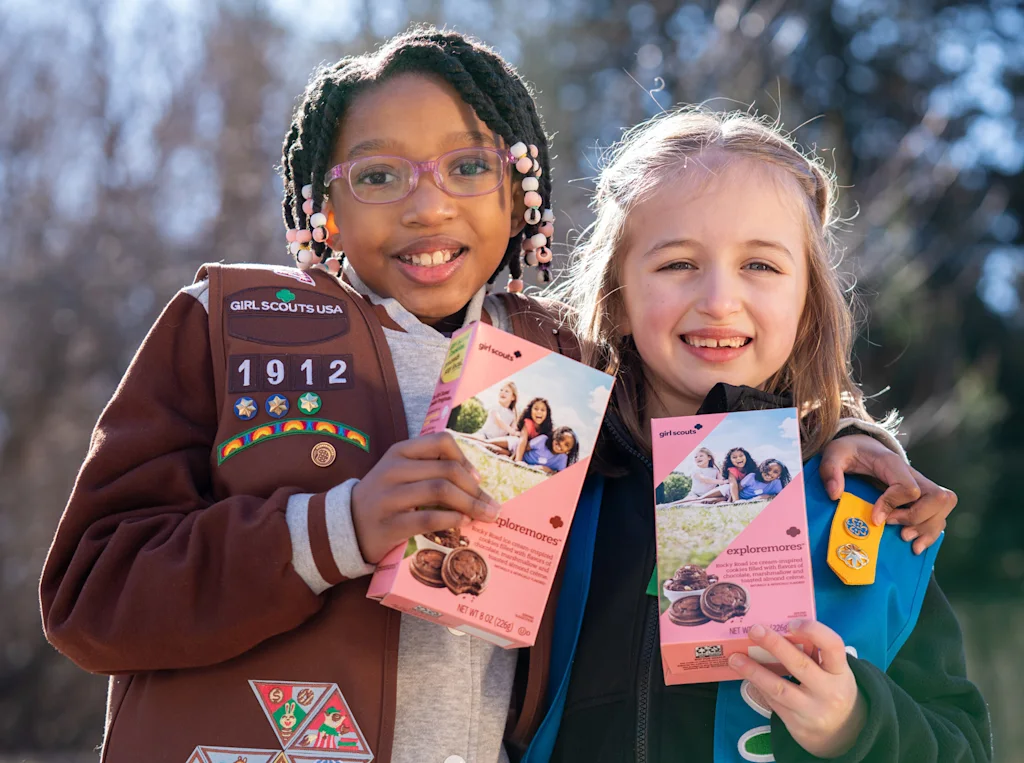
A brief history of the Girl Scout cookie
Girl Scout cookies date back almost as far as the Girl Scouts themselves. Along the way, dozens of new flavors have been tested and ultimately retired into the archives of Girl Scout cookies past.
According to GSUSA’s official record, the first Girl Scout cookies are believed to have been baked in 1917, just five years after GSUSA was first founded. Initially, the cookies were a more run-of-the-mill bake sale fundraiser—but in the following decades, the concept went national, becoming a more organized affair including specially licensed bakeries and a streamlined list of flavors. By 1978, all cookie boxes (regardless of the baker) included uniform GSUSA branding, as well as officially named flavors.
Since then, GSUSA has adopted a kind of two-pronged approach to its cookie sales. Each year, the company returns to a few classic cookie flavors that customers can reliably count on, historically including Thin Mints, Do-si-dos, Samoas, and Trefoils. Alongside those tried-and-true offerings, the nonprofit generally also includes at least one new or limited-time cookie to add some intrigue to the mix.
This second category has produced treats including Van’Chos, a pack of chocolate and vanilla sandwich cookies that ran from 1974 to 1983; Echo, an Oreo-style cookie that lasted from just 1987 to 1989; and Savannah Smiles, a lemon-shaped wedge that was purchasable from 2011 to 2019. More recently, a cookie called the Raspberry Rally was available for just one season in 2023, resulting in a black market-esque resale bonanza.
It’s a clever strategy that keeps customers coming back each year, both for their favorite classic cookies and to try something different—but in order to make the cut, a new Girl Scout cookie must first face an intensive development process.
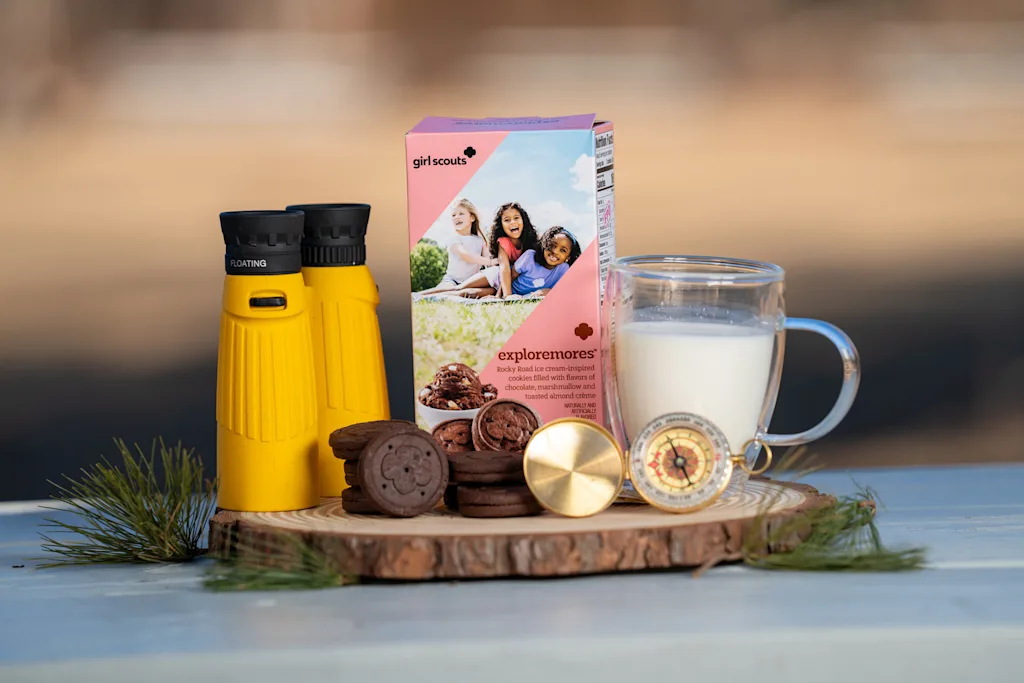
Why it takes three years to design a cookie
According to Lou, GSUSA doesn’t adhere to a strict annual cadence for new cookie releases. Instead, its team regularly reviews cookie performance, food trends, and feedback from Girl Scouts to judge its current cookie portfolio and decide when it’s due for a fresh addition. “Innovation is never ‘off,’” she adds. “We’re always looking ahead.”
And cookie innovation is no quick affair. Lou says brainstorming for a new release typically begins around three years in advance, starting with early ideation based on consumer trends, followed by taste testing and naming. In recent years, this naming process has expanded beyond simply describing the cookie to capturing some part of the Girl Scout experience (see 2021’s Adventurfuls, for example).
“Exploremores was chosen to reflect the spirit of curiosity, adventure, and exploration at the heart of Girl Scouting,” Lou says. “Every name is intentionally selected to connect back to our mission and the experiences girls gain through the program.”
Even after a cookie is approved, packaged, and coordinated with GSUSA’s two bakeries, it still takes about 18 months to make it to an actual cookie stand. From there, its fate is annually reevaluated based on sales performance, local Girl Scout council needs, and operational considerations.
In 2025, for example, GSUSA retired its Girl Scout S’mores and Toast-Yay! flavors, which were introduced in 2017 and 2021, respectively. Now, they live in the storied archive of cookies past. For any new cookie, like the Exploremore, lifespan is ultimately determined by how customers—and scouts—respond to it.
“While some cookies are retired to make room for innovation, fans know that Girl Scout history is full of beloved cookies—and who knows what the future might hold?” Lou says. “What never changes is our commitment to delivering a lineup that excites customers and helps girls succeed.”
source https://www.fastcompany.com/91470078/girl-scout-cookie-exploremore-design
Discover more from The Veteran-Owned Business Blog
Subscribe to get the latest posts sent to your email.

You must be logged in to post a comment.