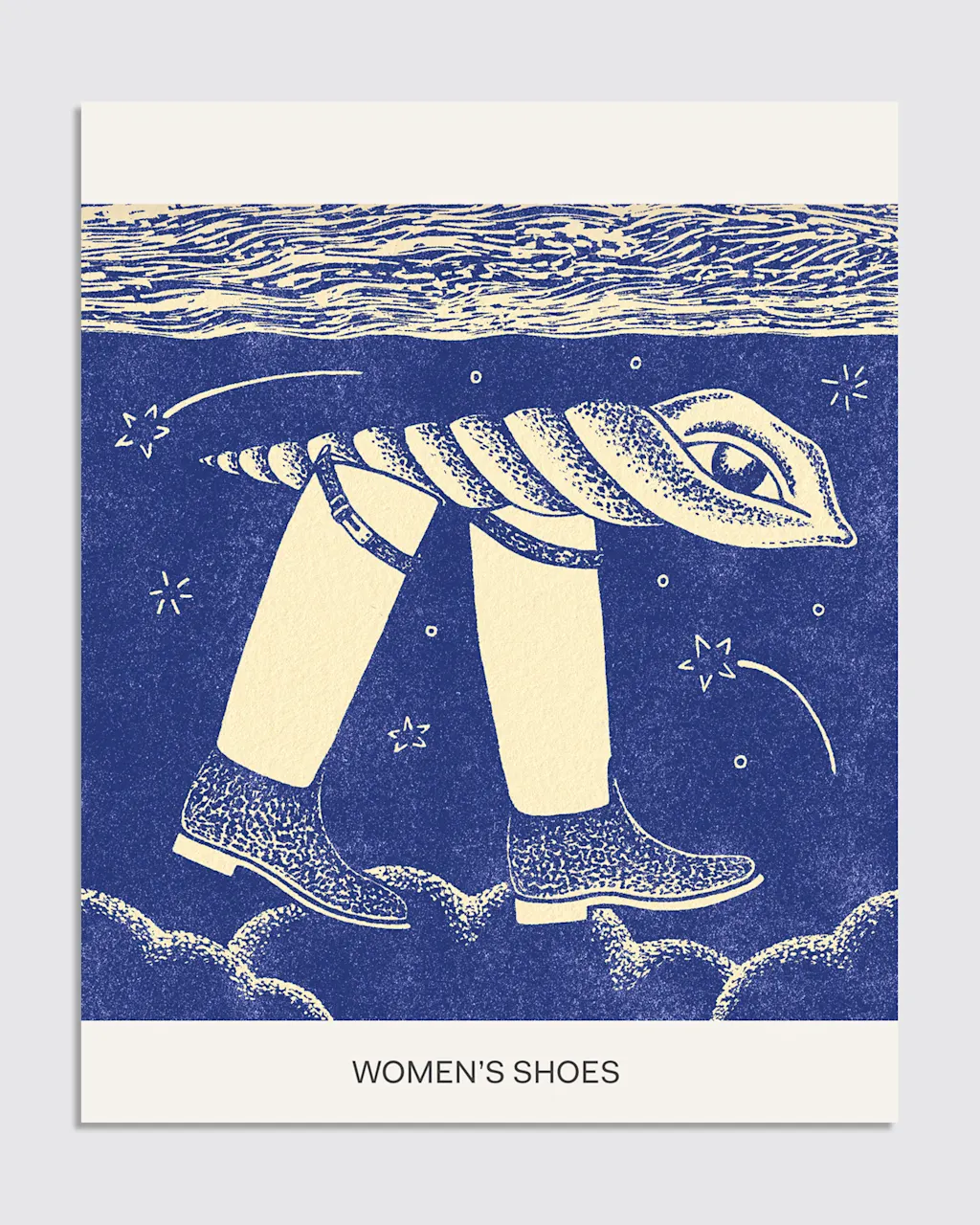
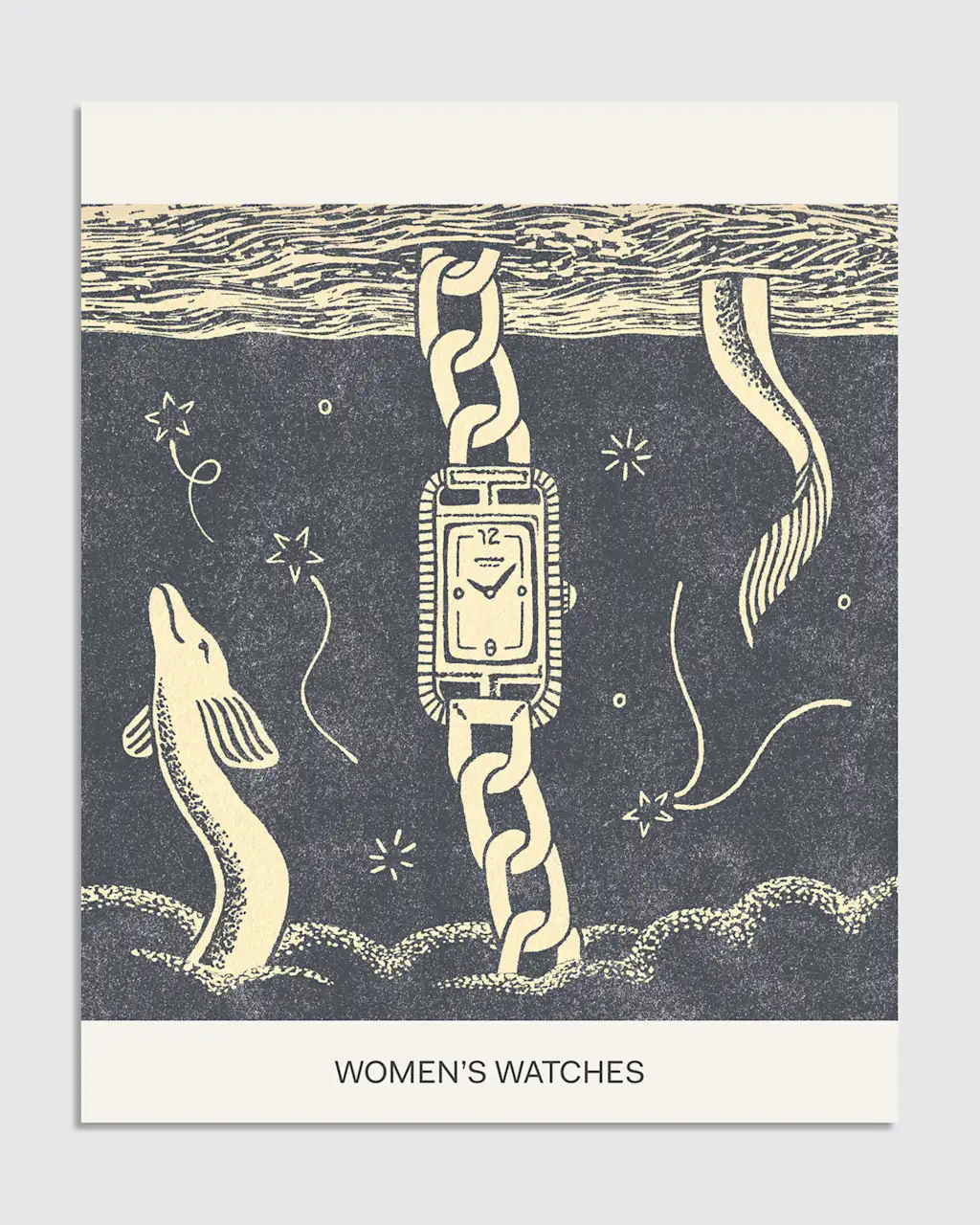
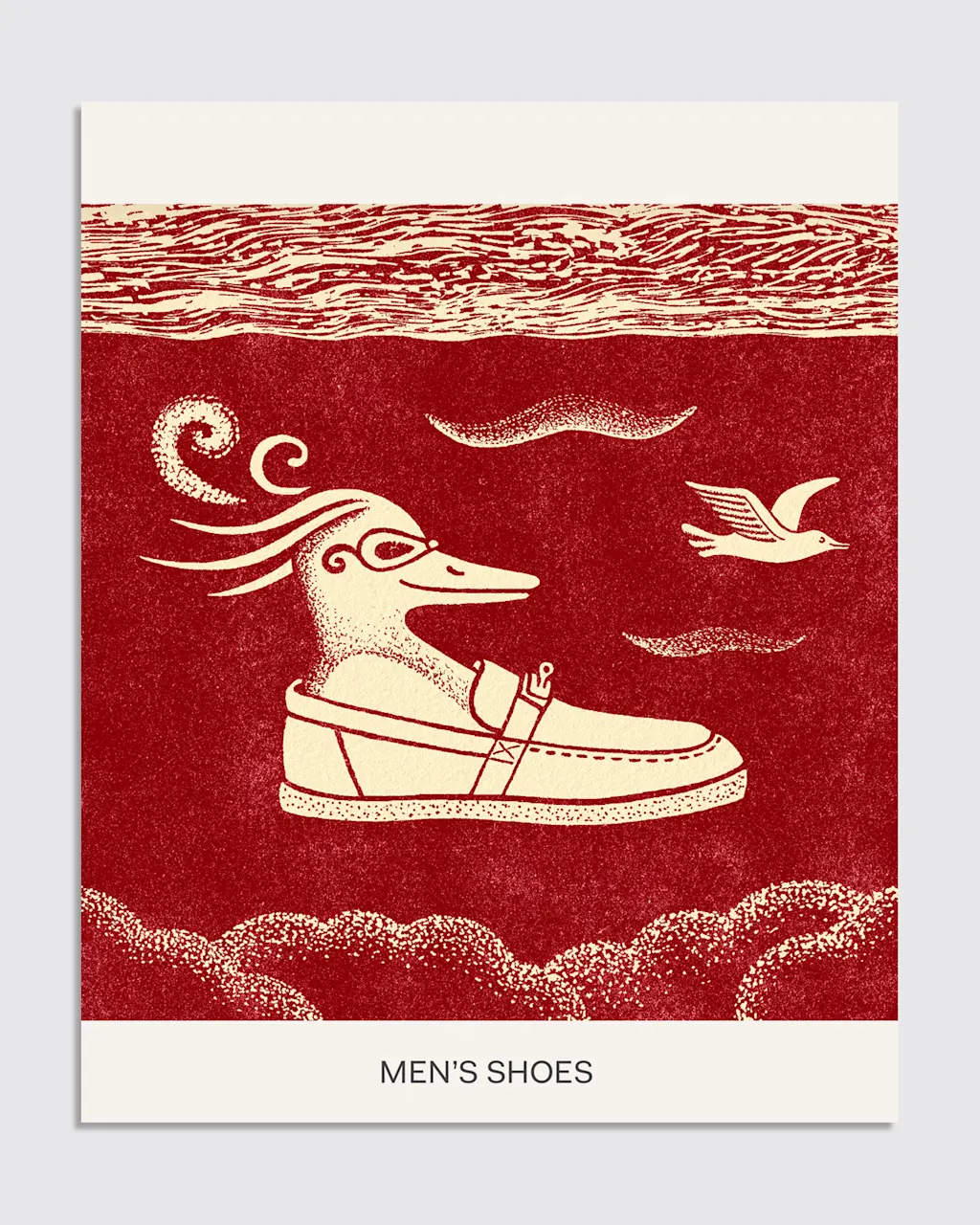
If you visit the Hermès website in search of a scarf or a handbag, you’ll be greeted by a collection of whimsical sea creatures swimming across the screen. To navigate to the watch section, you’ll click on an image of a watch flanked by an eel. To locate shoes, you’ll click on a loafer with a pelican sitting inside it as if it were riding a boat.
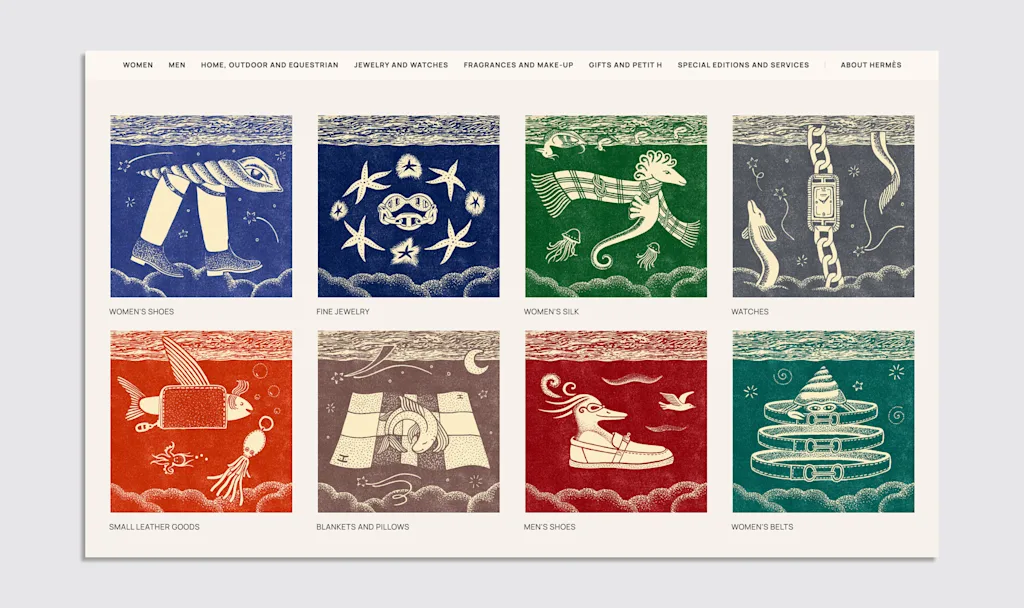
These sea horses and fish and eels and star fish are intriguing to the eye. While digitally-rendered images are hyper smooth, symmetrical, and flawless, these pictures bear all the imperfections of a hand-drawn illustration. We see the texture of the paper grain in the background, a slight irregularity in the lines, unevenness in the coloring. In a world of AI-generated images, these pictures feel special, perhaps even luxurious.
Hermès, which unveiled a new website this week, partnered with the French artist Linda Merad to create these images. Merad, whose pen and ink illustrations have appeared in The New York Times, Texas Monthly, and The Atlantic, specializes in hand-drawn images. It was her old-fashioned, analog process that appealed to the brand. “They wanted t create the impression that the art was made by a human,” Merad explains. “They wanted the viewer to feel the materiality of the drawing.”
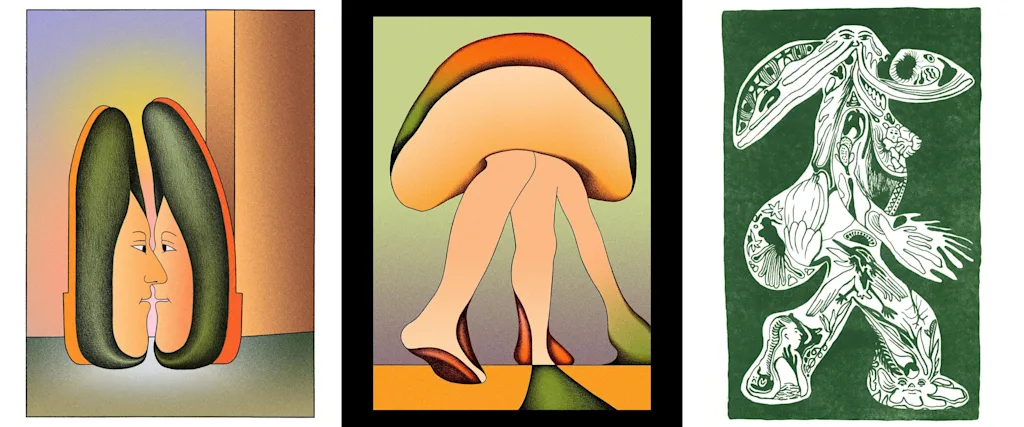
For Hermès, it is on-brand to tap a small artist for its imagery. The 188-year-old fashion house has become a luxury giant (generating $13.8 billion in revenue last year) by emphasizing the handcrafted nature of its products, which are made in European factories by well-trained artisans. Through its Instagram page, Hermès has put out calls to artists who are interested in offering their own interpretation of the brand, from creating images of horses as a reference to the brand’s equestrian roots to drawing pieces from the collection.
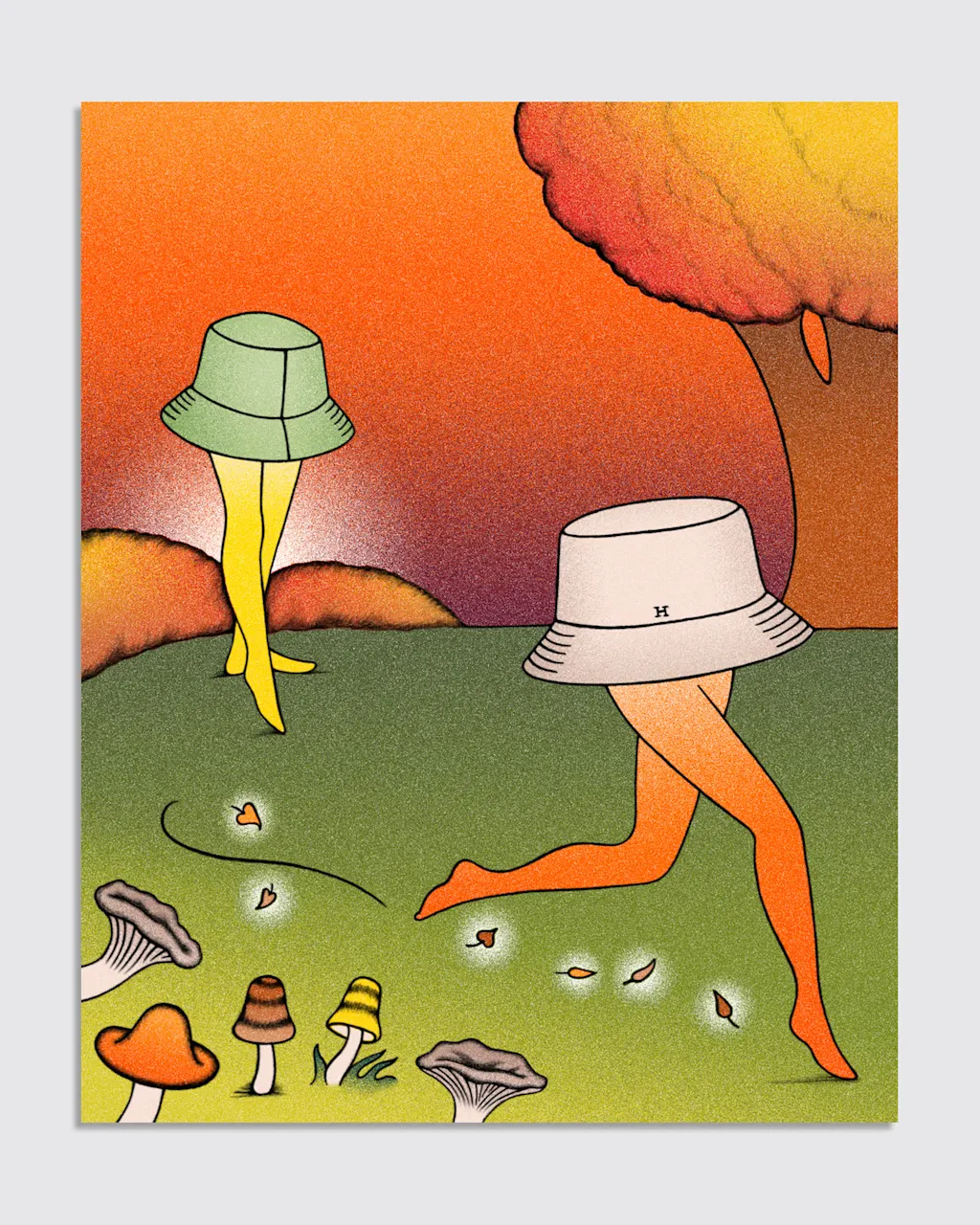
Merad answered the call six months ago, illustrating Hermès hats in her own fantastical style, drawing the bucket hats and caps with legs, dancing across a field of mushrooms. The Hermès team was so taken with her work that they invited her to create images of sea animals that would be featured on the brand’s Instagram campaign. Then, a few weeks ago, the Hermès team said they would be incorporating the images onto the e-commerce website, which came as a surprise. This is the first time that Hermès is using illustrations on its website. “It wasn’t planned,” Merad says. “The e-commerce team really liked my universe, so they wanted illustrations.”
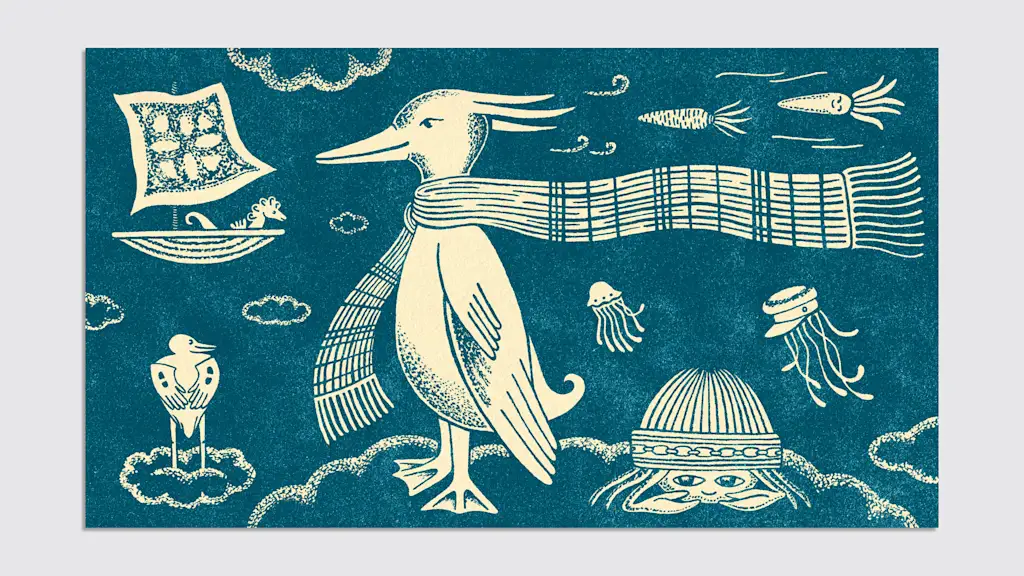
Given how enormous the company is, Merad says she was given remarkable creative freedom. She only worked with four other people, two Hermès art directors, one animator, and one musician. She says she was compensated for her work, with the Hermès team accepting her first offer. Hermès wanted to start with the motif of a seahorse, but she was free to build out an entire under sea world. “It’s the year of the horse in the Chinese calendar, and Hermès felt that horse imagery would be everywhere, so they wanted to do something distinct,” she says.
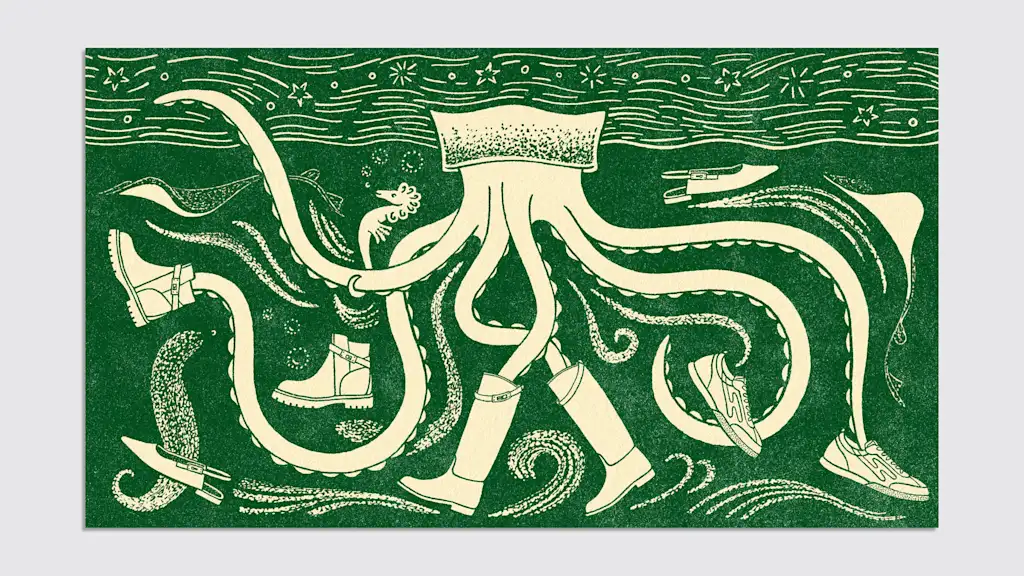
Her main constraint was including various products in the imagery, such as shoes, jewelry, and scarves, since they would be used to help customers navigate to product categories. Merad says she didn’t find this very onerous because she often juxtaposes animals with human elements. “I was surprised to get so much creative freedom from a luxury brand,” she says. “I like to mix several ideas and create hybrid forms. It allows me to make images that are funny and poetic.”
In a world where AI can produce high quality images for free, many artists fear that there will be less demand for their work. Indeed, AI image generators are trained on existing art, which effectively means that they are using artists’ work without compensating them, then reworking it into new images. But this partnership with Hermès suggests that original art made by human beings will also become increasingly valuable. Standing out in a digital world full of slop will require taking the time and money to work with artists.
Merad believes there is already a growing desire, in some quarters, for hand-drawn work. From the time she was a child, she always loved drawing pictures, particularly of clothing. She considered becoming a fashion designer, but she didn’t like the idea of having to creating large collections every season; she preferred to spend time focusing on each individual image. She thought her best chance of finding work as an artist was to become a graphic designer, so she attended the French art school, École nationale supérieure des arts appliqués et des métiers d’art, to learn graphic design.
But over the last few years, she’s found that clients are more interested in her hand drawn illustrations. She believes all the imperfections that come along with handcrafted work create images that are more interesting to the eye in a world where so much digital art looks the same. “When things are made by hand, you can tell there is a soul behind them,” she says. “There is charm and humanness in the imperfections than something that looks more robotic.”
source https://www.fastcompany.com/91471305/hermes-hand-illustrated-website-is-the-ultimate-luxury
Discover more from The Veteran-Owned Business Blog
Subscribe to get the latest posts sent to your email.

You must be logged in to post a comment.