Lego has a nostalgia problem. I do, too. Like Hollywood and its eternal cycle of remakes, the Danish company has found a bottomless treasure pot full of GenX and Gen Z people willing to burn their credit cards to turn their golden memories into bricks. By my count, 2025 alone brought a record-setting 16 sets related to old Lego properties and external IPs, shattering 2023’s previous peak of 9 sets.
Whether that’s considered a problem or not depends on who you ask. You can argue that we (the people who keep buying these sets) are all the ones who have the problem. The Danish are just milking it.
Building Lego soothes kids and adults alike but, when you are putting together these nostalgia-sets, there is an additional satisfaction factor. It’s part of you, it’s what you know, like that old song that plays in your head from time to time and you have the urge to play on your headphones. As you assemble it, you can’t help but enjoy the way in which the Billund designers have abstracted the original objects and created details and features that seem impossible to reproduce at pixel-size brick resolution.
Lego won’t share sales figures but, privately, insiders have hinted that these sets bring in lots of revenue, especially because they are large and complex with many pieces and high price tags. The year-over-year increase of new sets seem to confirms this: Between 2014 and 2022, the company released an average of 3.7 sets per year tapping into ’70s, ’80s, and ’90s themes. That number has more than doubled. From 2023 through 2025, Lego produced 31 nostalgia-focused sets—a dramatic acceleration that establishes a new baseline.
Many of these sets are part of the Lego Icons line, which launched in 2020 as a way to tap into the growing appetite from Lego’s adult customers. Other sets come through the Lego Ideas, launched in 2008, a sort of Kickstarter-ish platform that asks fans to submit designs for official Lego sets. These are then voted on by the community and a handful become commercial products each year.
Until 2024, it was an open design call but that year Lego launched explicitly decade-targeted design challenges. First came the “Turn Back Time—80s Challenge,” which generated more than 290 submissions. The challenge proved so successful that Lego immediately launched a “Build Your Nostalgia—90s Throwback” competition for 2025. Rather than waiting for the nostalgia to happen organically, Lego is now actively soliciting it because it works.
Now, if you are like me—or my son, who is definitely not a Gen X but is growing up in Gen X culture—you may be wondering what’s cool this year. Well, that’s why I’m here, my friends. These are the best at every price point all the way up to the crazy nuts $1,000 Death Star (now, if you buy that one, then you will have a very real problem of the financial kind).
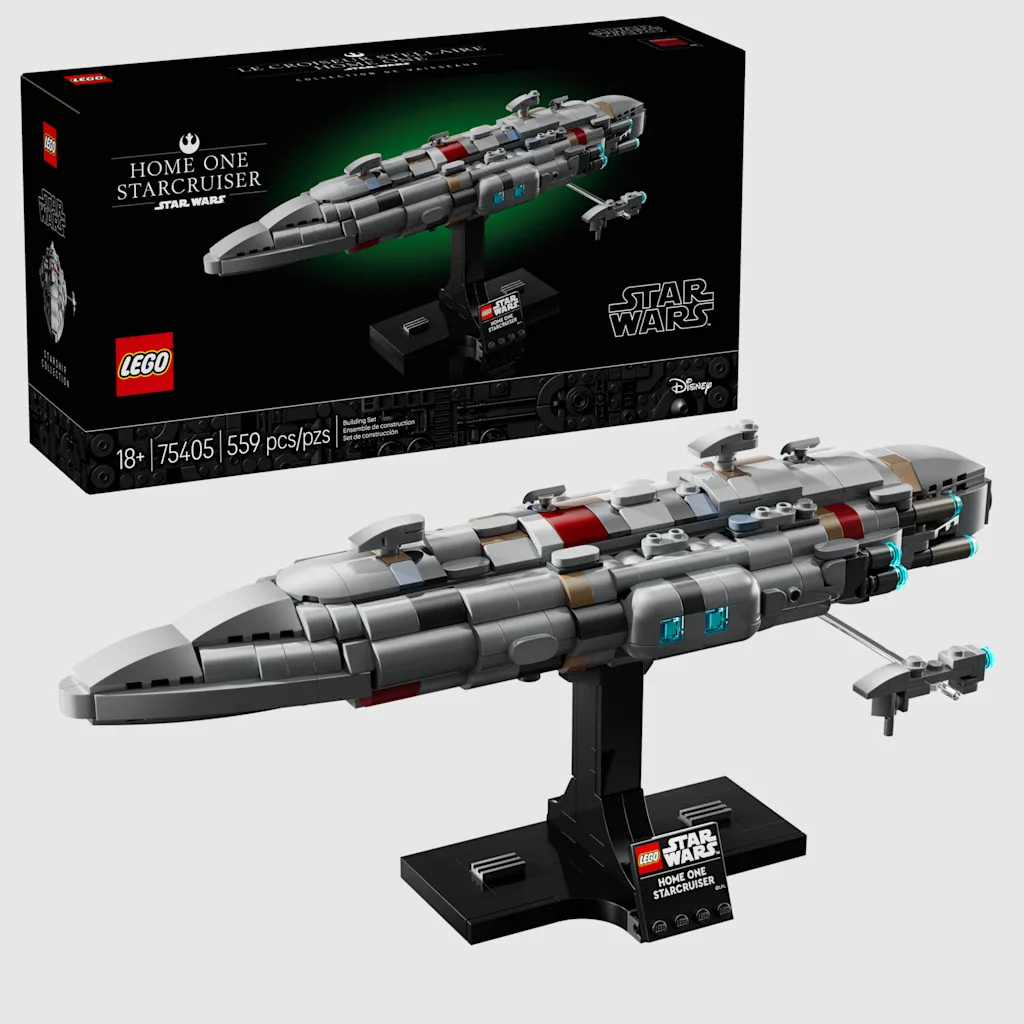
This is a tiny reminder that Star Wars Original Trilogy sets remain a cornerstone of Lego’s nostalgia strategy. Released January 2025 for $70, this 559-piece Rebel Alliance frigate appeared in Return of the Jedi as part of the climactic Endor battle. It’s a compact set designed for anyone who wants a manageable Star Wars display without a 7,541-piece Millennium Falcon commitment. That it came out on the very first day of 2025 signals how central Star Wars remains to Lego’s calendar.
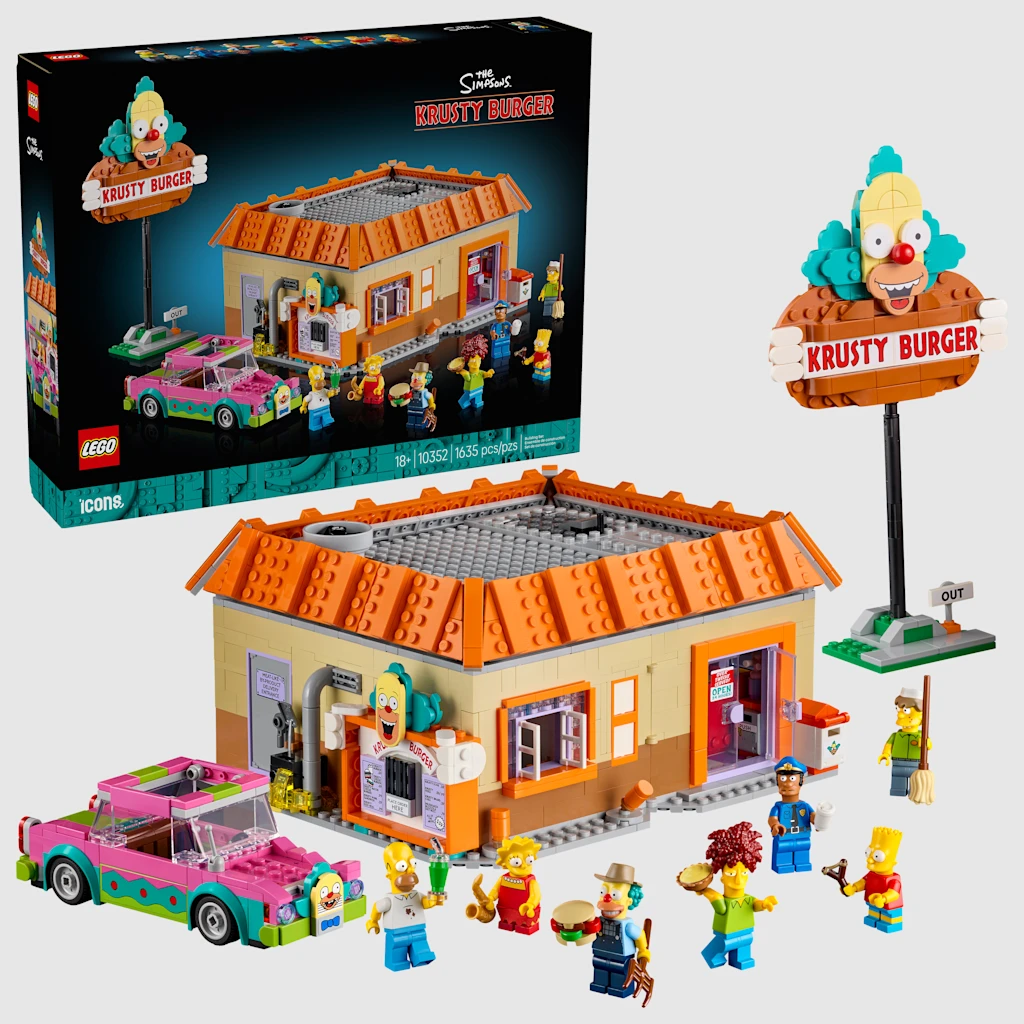
This year also brought a new Simpson set. Homer’s favorite fast-food joint comes to life with 1,635 pieces. The Krusty Burger has been serving fictional beef since the show’s early ’90s heyday, and Lego has captured every detail: the oversized signage, the drive-through window, and a small buildable Krusty the Clown figure. It’s the kind of set that doesn’t pretend to be anything other than what it is—a shrine to a show that defined a generation’s sense of humor. At $210, it’s a reasonable price point for 1990s pop-culture archaeology. The set includes minifigures of Homer, Marge, Krusty, and the rest of Springfield’s best and finest.
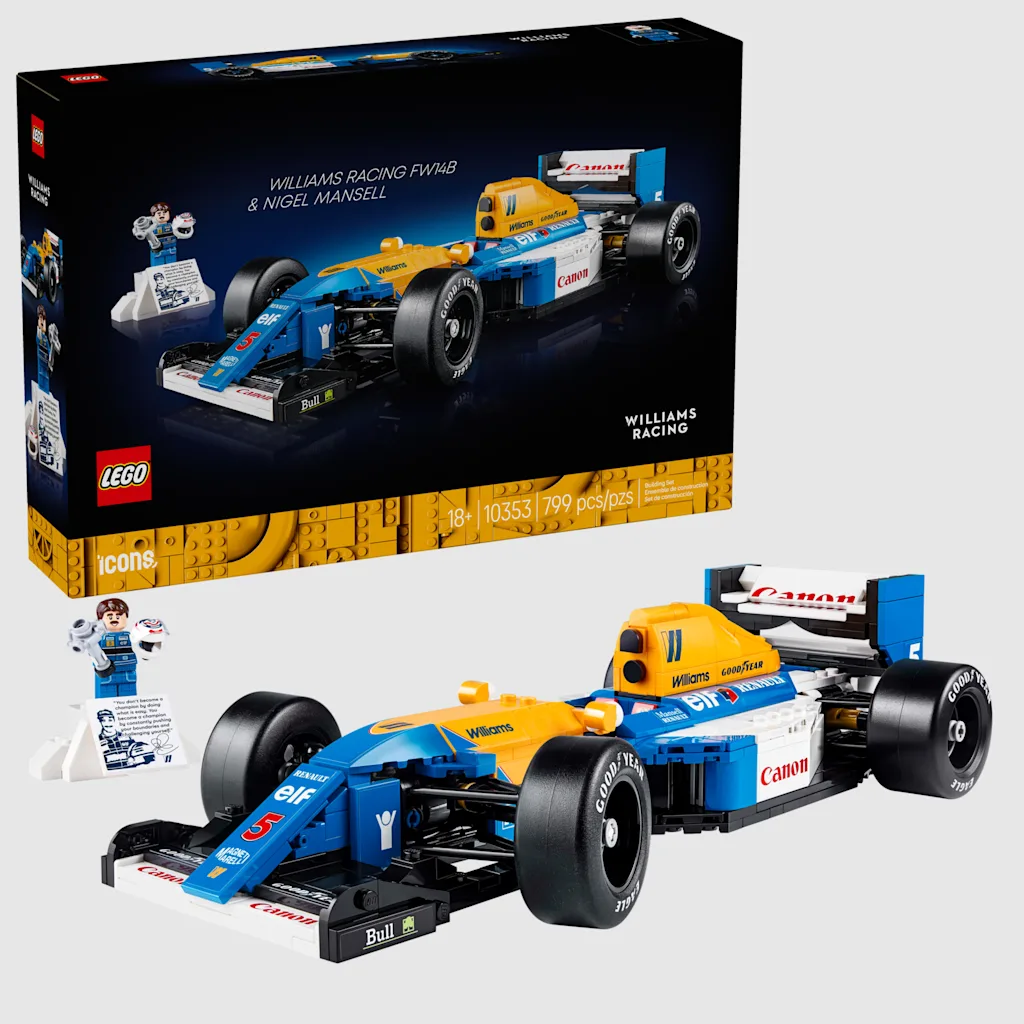
Williams Racing FW14B & Nigel Mansell
After releasing Ayrton Senna’s McLaren last year, this is Lego’s tribute to one of Formula One’s most dominant seasons: 1992, when British driver Nigel Mansell piloted the Williams FW14B to legendary status. With 799 pieces and priced at $80, this is the kind of nostalgia that doesn’t rely on Hollywood but will appeal to the GenX and GenZ generations. The model includes working steering and suspension details that make it feel less like a toy and more like precision engineering translated into plastic.
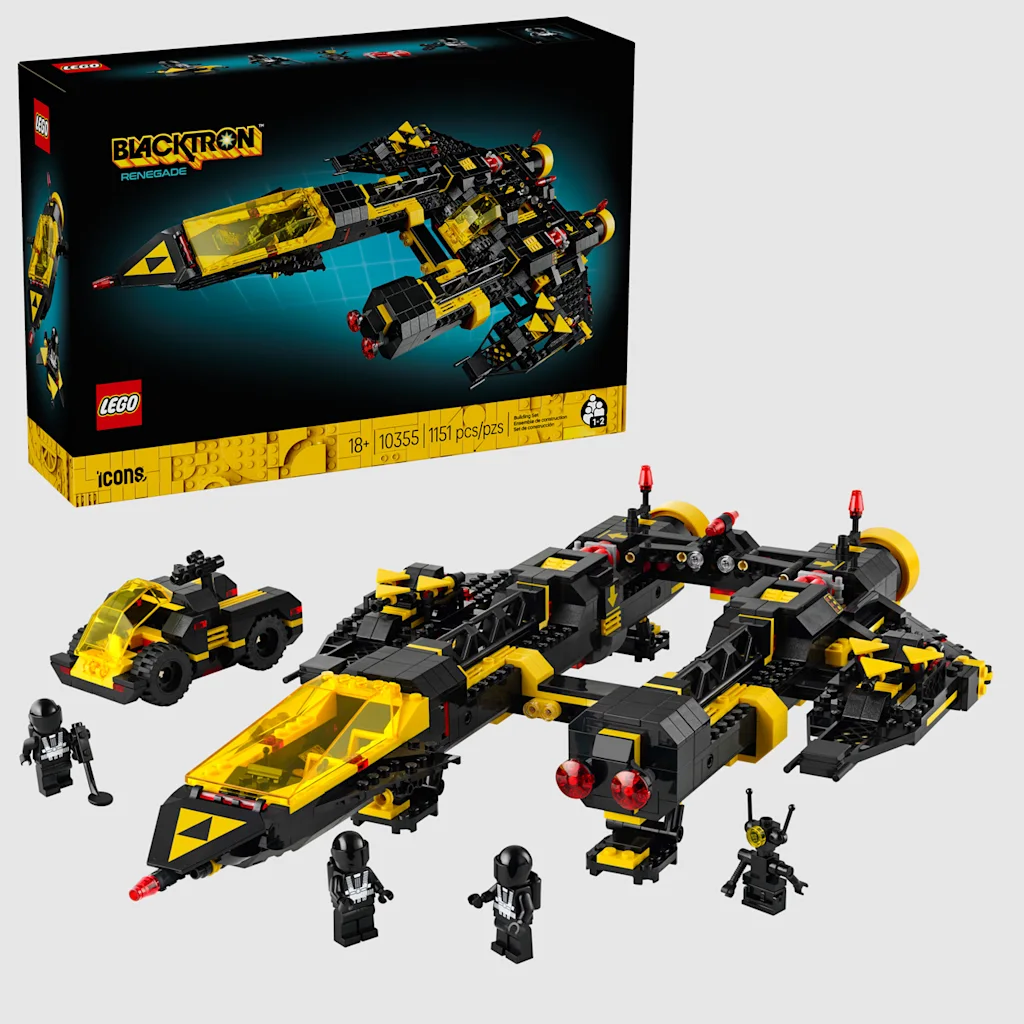
This one is pure Lego archaeology and made a lot of people happy back in the late ’80s. The Blacktron theme launched in 1987 and became one of the company’s most iconic design languages—a line of villainous space vehicles with electric lime-yellow and black color schemes that defined entire childhoods, opposite from the late ’70s good guys of the Galaxy Explorer. The Blacktron Renegade, $100, resurrects that aesthetic with precision.
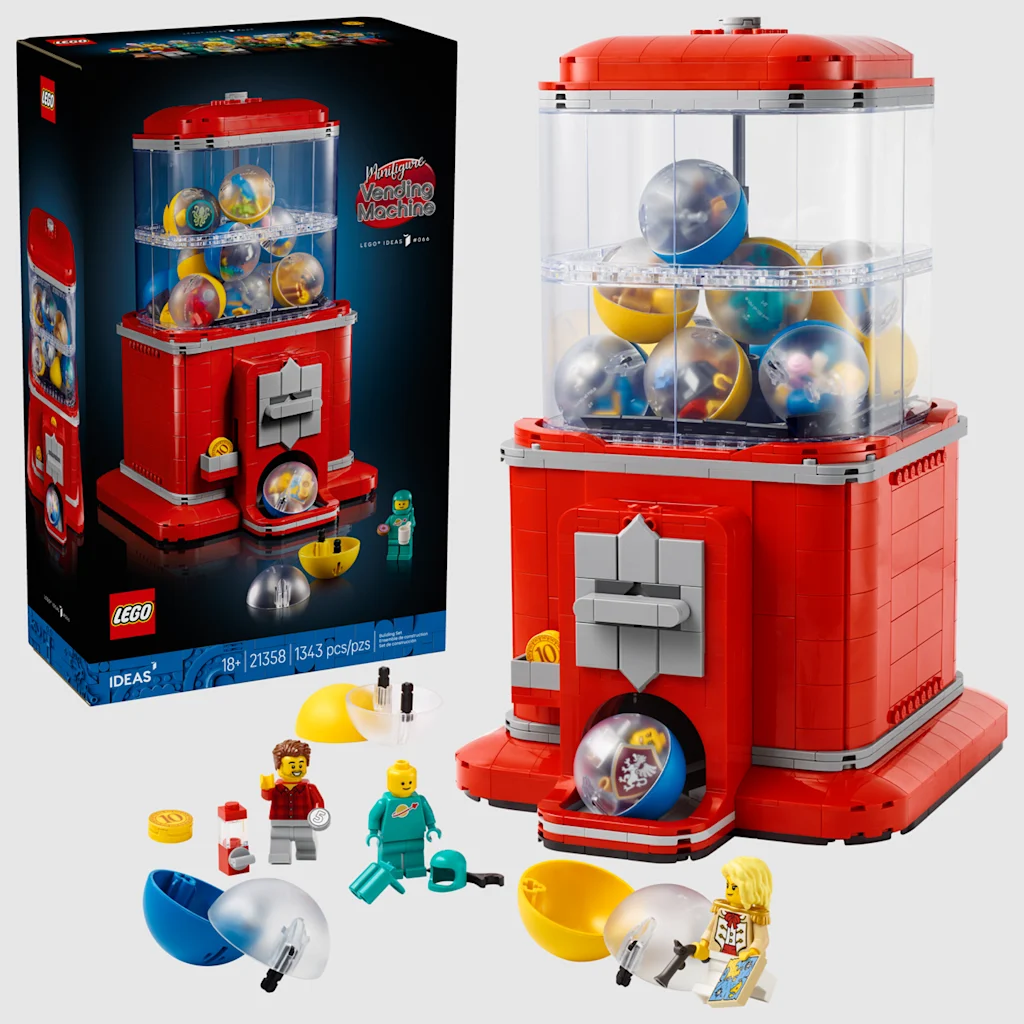
This one emerged from Lego’s Ideas platform, and it is a meta-nostalgic deep cut. The 315-piece set is essentially a tribute to Lego’s own 1980s and ’90s theme history. The vending machine dispenses minifigures, but the real genius is that it functions as a shrine to classic Lego design eras. It’s designed to celebrate the Classic Space, Pirates, and Castle themes that defined childhoods. Priced at $100, it’s Lego essentially building a monument to itself, self-referencing nostalgia so dense that it risks becoming an emotional black hole.
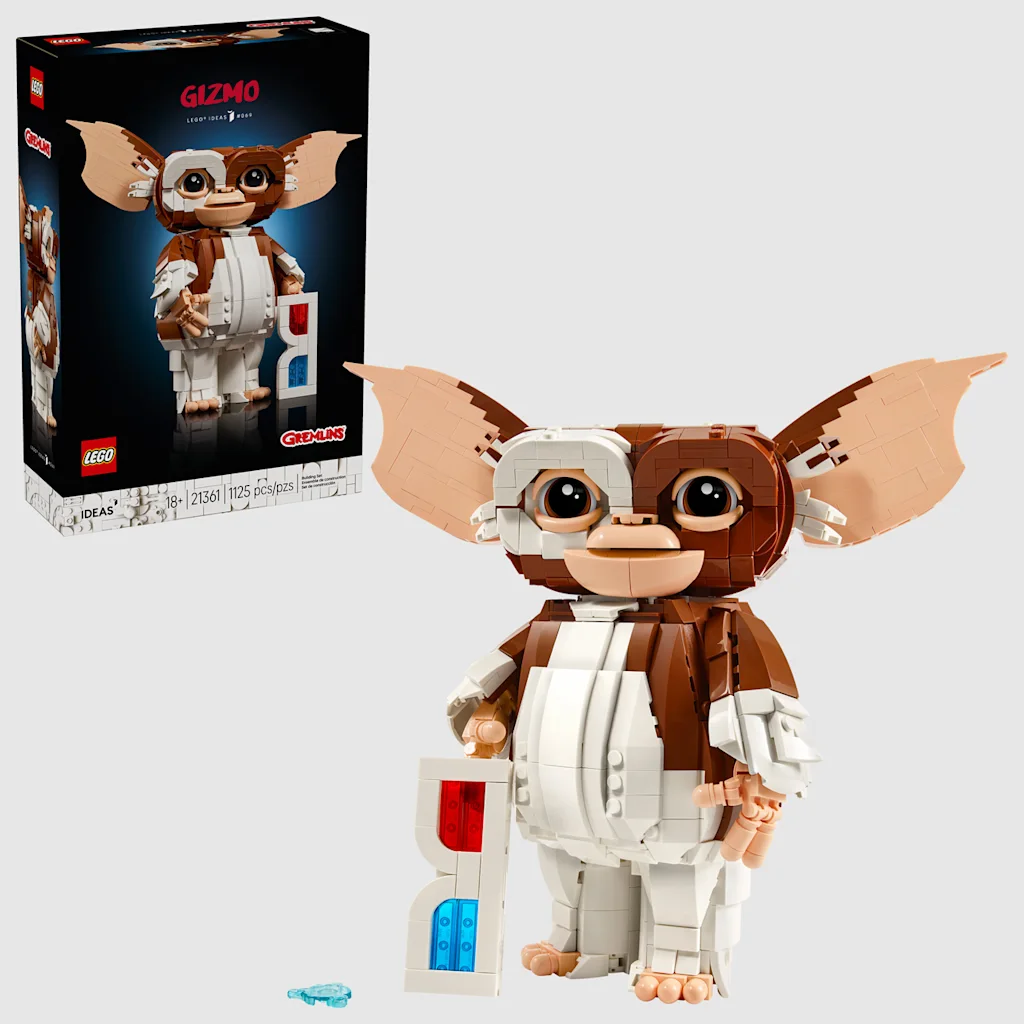
The 1,125-piece set captures Gizmo, the Mogwai creature from Gremlins, in brick form. The process of bringing Gizmo to life required Lego’s design team to solve problems that shouldn’t exist. How do you suggest fur texture with plastic bricks? How do you create a nose that reads as a nose without being literal? Lego senior model designer Chris McVeigh told me how he tackled the fur question by using a specific element he originally developed for Lego’s 2023 Architecture set of Himeji Castle: a small 2×2 plate with an upturned corner. “I decided to use that to give the effect of wispy hair flowing off the model,” McVeigh says. For the nose, he experimented with half-circle and full-circle plates, ultimately landing on a 2×2 round plate with subtle cutouts. “It’s one of the exciting things about Lego,” McVeigh explains. “The brain fills the blanks.” At $110, it’s priced in the mid-range for a detailed character build, which is appropriate for a creature that required months of design refinement to get exactly right.
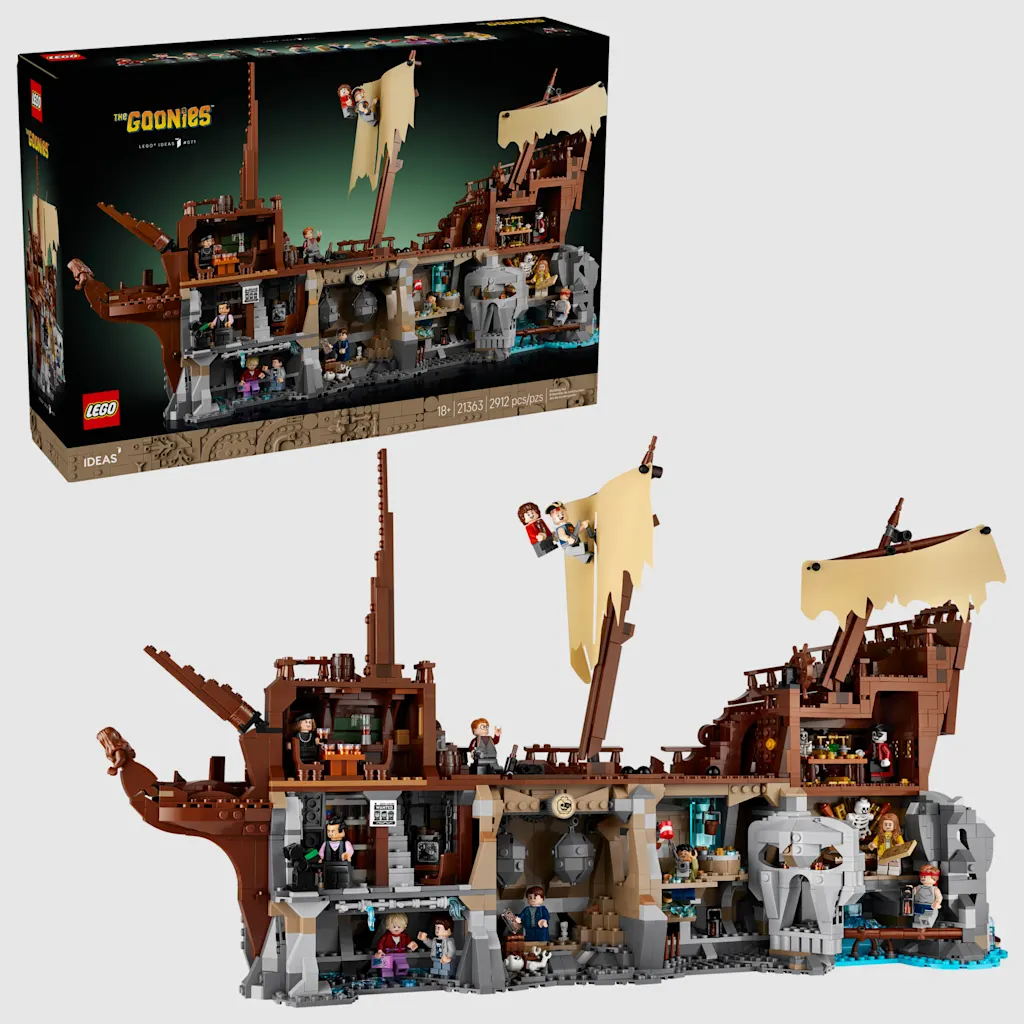
This 2,912-piece behemoth, priced at $330, recreates an iconic scene from Richard Donner’s 1985 adventure film. Born from Lego’s “Turn Back Time—80s Challenge,” where it competed against more than 290 other submissions, the set includes buildable structures and minifigures of the main Goonies characters. It doesn’t get more cultish than that.
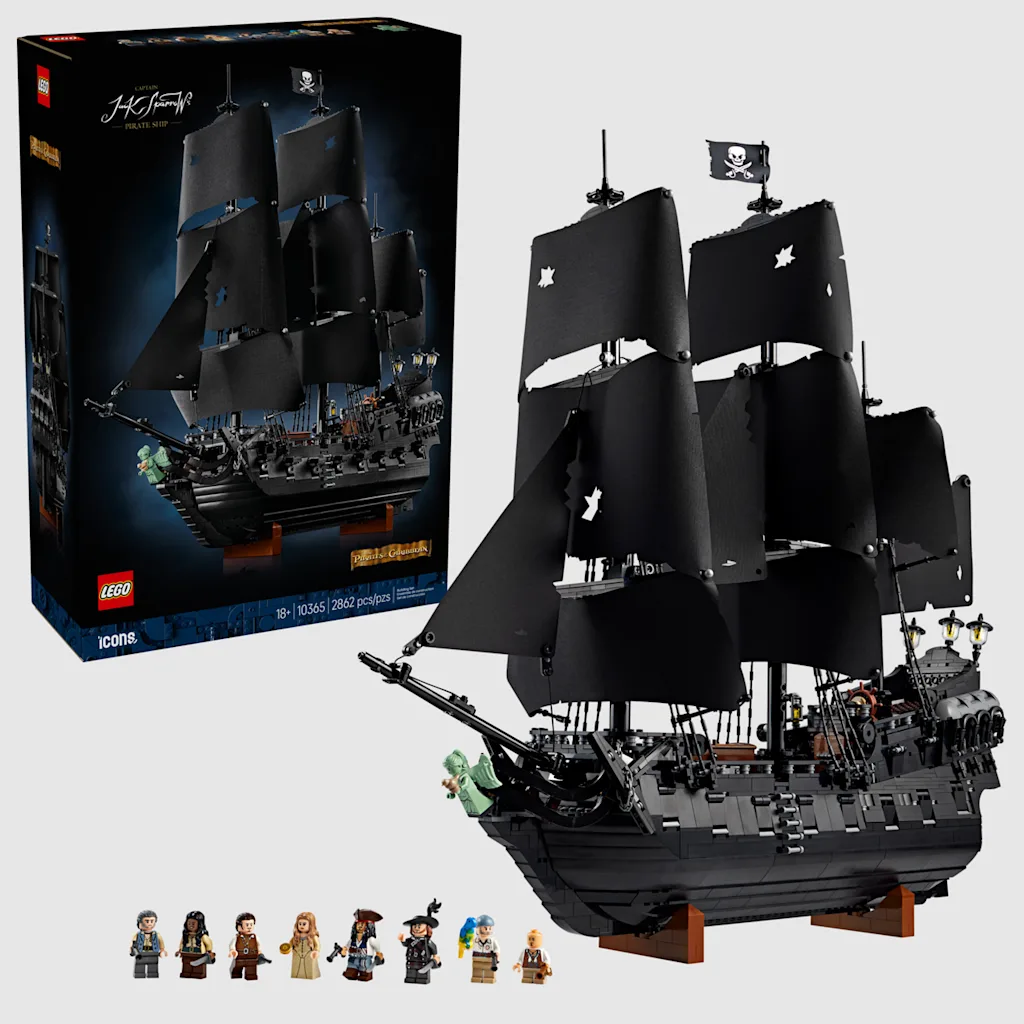
Captain Jack Sparrow’s Pirate Ship
OK, so this one is early aughts but, with Jerry Bruckheimer and Johnny Depp, it feels ’90s to me. Released in September, it’s backordered everywhere, becoming one of the company’s hottest hits. The $380 set brings Jack Sparrow and the Black Pearl to life with 2,862 pieces, recreating the iconic pirate ship from the 2003 film The Pirates of the Caribbean: The Curse of the Black Pearl, complete with detailed rigging, a functioning ship’s wheel, a working cannon, and a brig with torture implements. Multiple minifigures come with the set, including Jack Sparrow, Barbossa, Elizabeth Swann, and Will Turner.
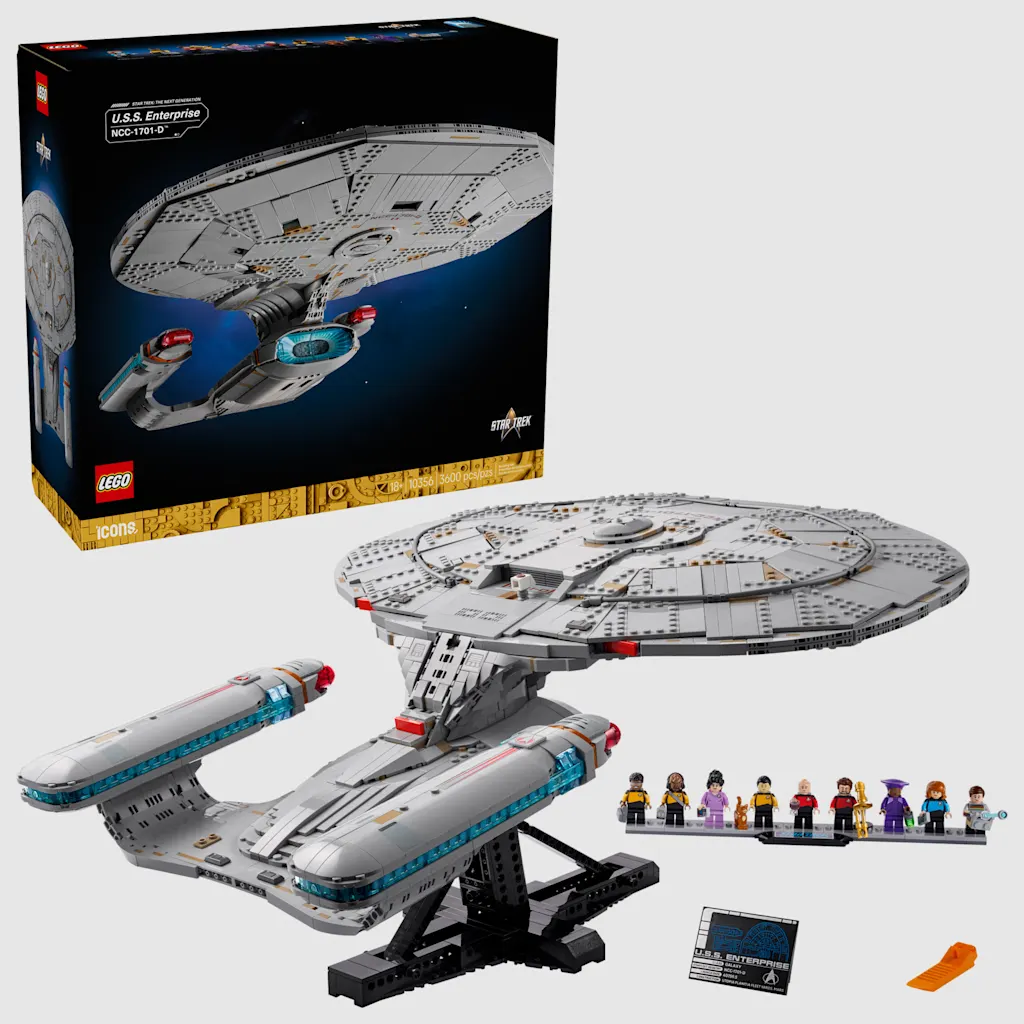
Star Trek: U.S.S. Enterprise NCC-1701-D
This was a shocker for Lego aficionados, who are used to living in a Star Wars dominated world. Just for that, it became the champion of 2025 nostalgia releases with 3,600 pieces. Priced at $400, it reproduces the Starship Enterprise-D from TV series Star Trek: The Next Generation, which aired from 1987 to 1994 and defined what Star Trek meant to millions of people who never watched the original. The model measures 23.5 inches long and includes a working saucer separation function—a feature so technically ambitious it required serious engineering. It has all the crew (nine minifigures), including Captain Picard. It’s also bundled with set 40768, the Star Trek Type-15 Shuttlepod, a 261-piece GWP that features opening wing doors and a detailed interior LCARS display.
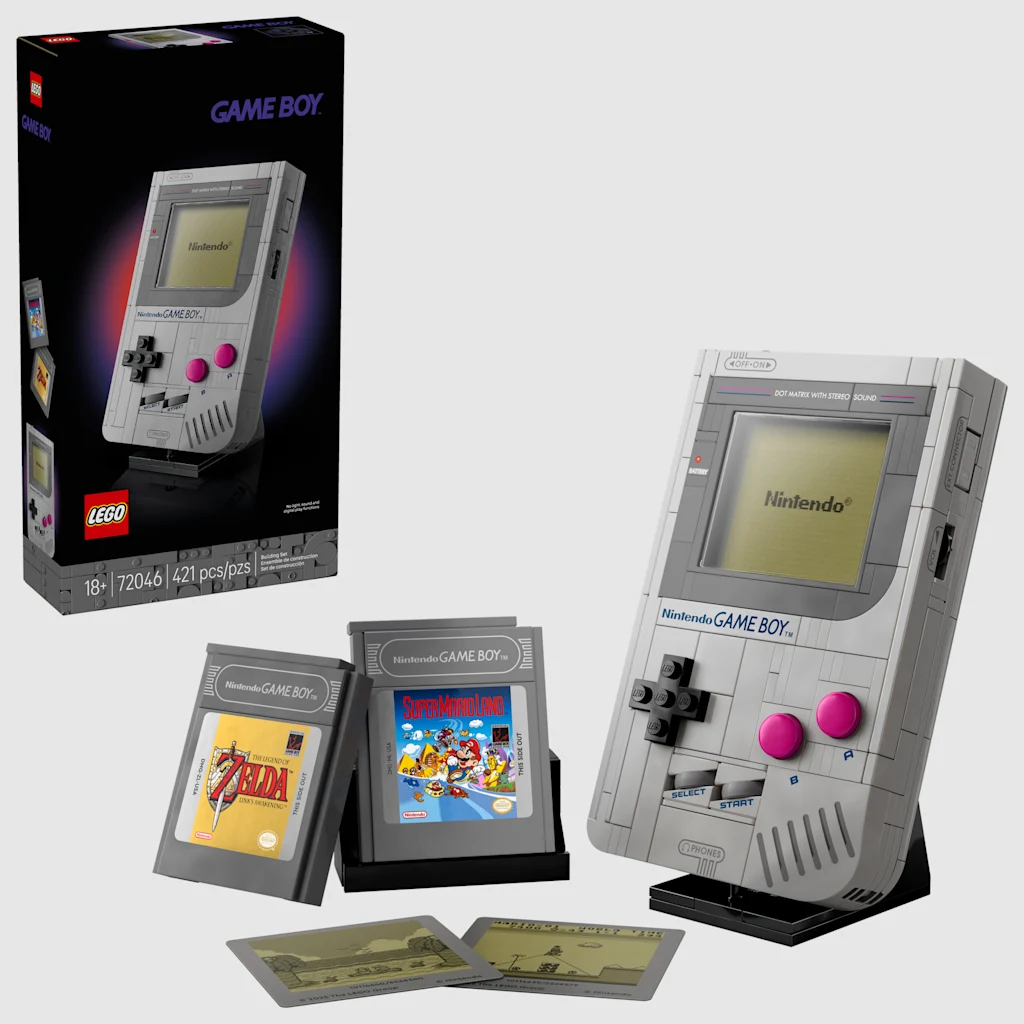
The $60 set recreates the original 1989 Nintendo Game Boy in brick form with impressive accuracy. The measurements are almost identical to the original and it includes posable directional buttons, a pressable A/B button cluster, and a buildable cartridge slot. The set even includes minifigure-scale versions of classic Game Boy games like Tetris and The Legend of Zelda printed on the buildable cartridges. It’s also my favorite set because you can actually make it into a real Game Boy using this kit.
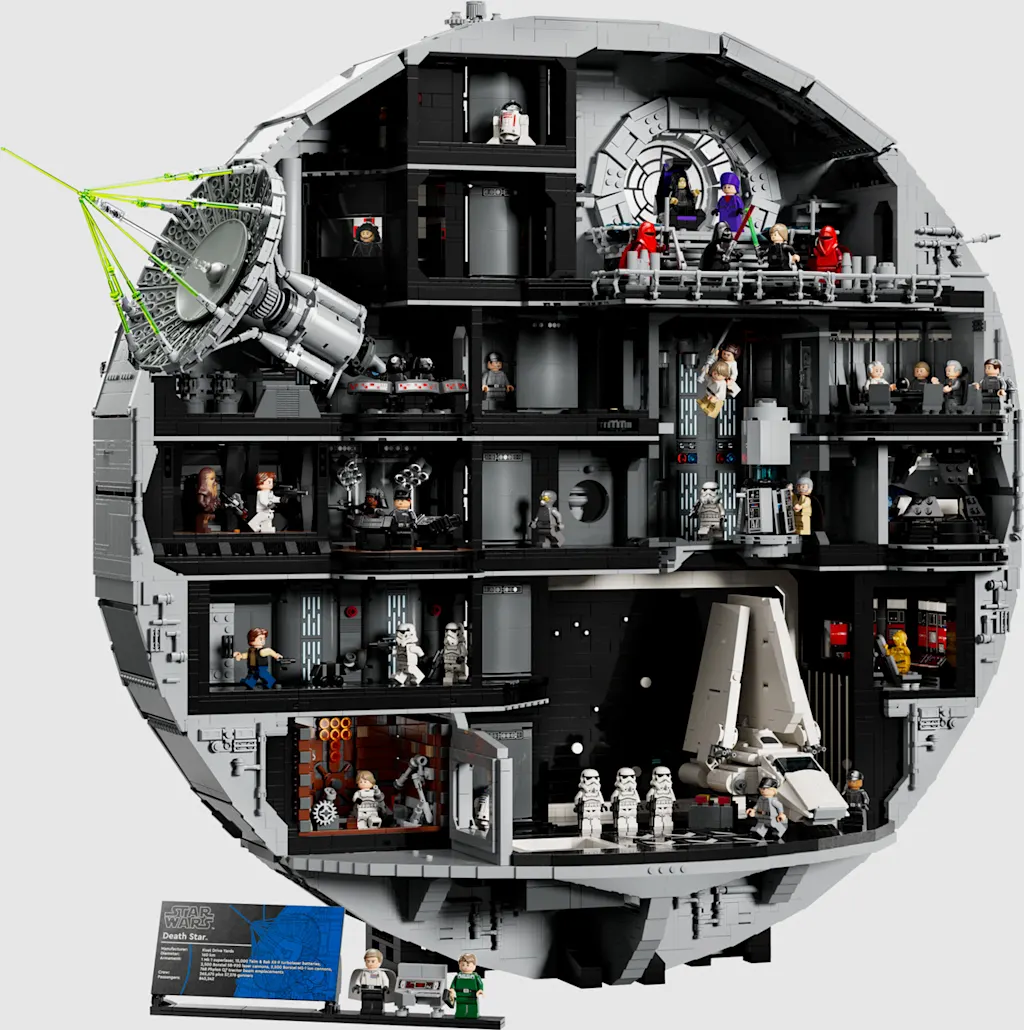
This is no Lego Set. At 9,023 pieces and $1,000, this is a bloody actual moon. It is so big it must actually have its own gravity field. It is also the most expensive Lego set ever made, breaking the previous record held by both the Millennium Falcon UCS ($850) and the AT-AT UCS ($850). Released back in October, this Death Star is a cross-section cutaway of the Empire’s most infamous space station that features little vignettes from A New Hope and Return of the Jedi: the detention block, trash compactor, tractor beam control room, Moff Tarkin’s boardroom, and the Emperor’s Throne Room where Luke and Vader’s final confrontation takes place. It stands 27.5 inches tall and it is 31 inches wide. The build includes 38 minifigures—including three different Luke Skywalkers—Tatooine outfit, Stormtrooper disguise, and Return of the Jedi’s Jedi Knight—two Han Solos, Princess Leia, Darth Vader, Emperor Palpatine, Grand Moff Tarkin, and even the internet-famous ‘Hot Tub Stormtrooper’ from the Lego Star Wars vi
source https://www.fastcompany.com/91455872/lego-is-obsessed-with-nostalgia-so-is-everyone-else
Discover more from The Veteran-Owned Business Blog
Subscribe to get the latest posts sent to your email.

You must be logged in to post a comment.