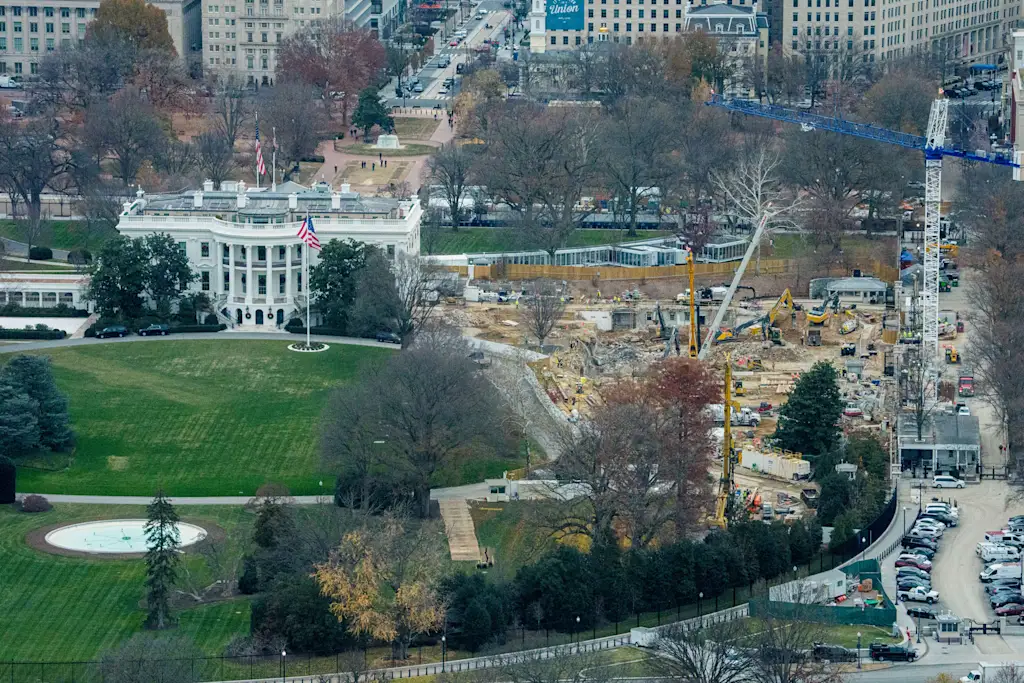
President Donald Trump’s plans to add a ballroom to the White House would be bad for the design of the White House complex and grounds, according to a National Park Service (NPS) report. The report said the annex would “disrupt the historical continuity of the White House grounds and alter the architectural integrity of the easts side of the property.” Still, Trump is clear for now to move ahead with his plans.
The NPS report is just the latest speed bump facing Trump’s plan to build a new annex since he had the White House East Wing demolished in October without seeking outside approval. It’s a saga of inflated expectations and a ballooning budget that’s blowing past calls for preservation and restraint.
The NPS’s environmental assessment was released because the agency manages the White House, its grounds, and surrounding areas including Lafayette Square and sites in and around the Ellipse. The National Environmental Policy Act and Department of Interior regulations also compel the agency to.
Their assessment found no significant environmental impact from building a ballroom and noted successive administrations have wanted a permanent, secure event space on White House grounds. But it also highlighted aesthetic and cultural concerns about Trump’s plans. That might not matter.
Here’s where Trump’s plans to build a new building on the White House grounds stands:
Trump replaces the original architect
Trump confirmed on Dec. 4 to the Washington Post that he replaced the ballroom’s original architect McCrery Architects with a new firm called Shalom Baranes Associates.
The switch up came following reports that Trump and McCrery Architects CEO Jim McCrery II disagreed over the planned size of the new building. McCrery reportedly believed Trump’s plans for a 90,000-square-foot ballroom would dwarf the 55,000-square-foot building of the main White House mansion.
Trump has inflated the estimated cost and size of the planned ballroom over time, and initially said it wouldn’t interfere with the East Wing.
In July the White House announced a building that would seat 650 people for an estimated $200 million. That grew to plans for complex with space to seat around 1,000 people that Trump said Wednesday would cost $400 million. The White House says private donors are paying for construction costs.
Preservationists file lawsuit to pause construction
The National Trust for Historic Preservation filed a lawsuit on Dec. 12 accusing Trump of breaking the law by moving ahead with the East Wing teardown and plans for a new ballroom without public input or any sort of independent review.
The National Trust said that Trump should have submitted his plans to Congress and the National Capital Planning Commission and the group asked the court to put a pause on construction.
“No president is legally allowed to tear down portions of the White House without any review whatsoever—not President Trump, not President Biden, and not anyone else,” the lawsuit reads. “And no president is legally allowed to construct a ballroom on public property without giving the public the opportunity to weigh in.”
In a court filing on Dec. 15, the Trump administration claimed construction must continue for unnamed national security reasons. Attorneys for the administration said the National Capital Planning Commission and the congressional Commission of Fine Arts will review Trump’s plans “without this Court’s involvement.”
A judge on Dec. 16 ruled that construction could move ahead after it rejected the National Trust’s request to temporarily halt the project.
NPS weighs in
An NPS environmental assessment published Dec. 15 estimated Trump’s plans for a 90,000-square-foot building with seating for more than 1,000 people would be completed by Trump’s final summer in office, in 2028. It also said the building would adversely effect the cultural landscape of the White House grounds.
The report notes the imbalance of a ballroom that’s bigger than the rest of the White House and in adding a two-story East Colonnade. “The new building’s larger footprint and height will dominate the eastern portion of the site, creating a visual imbalance with the more modestly scaled West Wing and Executive Mansion,” it says. “These changes will adversely alter the design, setting, and feeling of the White House and the grounds over the long-term.”
The assessment also notes that construction introduce temporary risks to the rest of the White House due to things like noise and vibration.
Regardless of the report’s findings, it concludes that the planned building would meet the needs of providing a permanent, secure event space on the White House grounds, and that it doesn’t rise to the level of needing an environmental impact statement to be prepared.
Discover more from The Veteran-Owned Business Blog
Subscribe to get the latest posts sent to your email.

You must be logged in to post a comment.