Post Preview
Key Takeaways
- Commercial mortgage originations are on the rise, signaling strong market activity and increased investor confidence.
- Office sector delinquencies are climbing, pointing to persistent weakness in this segment of the property market.
- Policy shifts, including new tariffs, are dampening market sentiment and shaping future investment behaviors.
- Multifamily mortgage debt has grown steadily, underscoring sustained interest in this asset class amid persistent housing needs.
- Looming maturities for office loans pose a major challenge as lenders and borrowers face tough decisions on refinancing and restructuring.
The commercial real estate (CRE) market is continuously adapting to economic shifts, lending dynamics, and evolving policy environments. For investors, developers, and industry professionals, understanding cutting-edge trends is critical to navigating both opportunities and risks in the mortgage sector. As demand for capital ebbs and flows, savvy decision-making increasingly relies on timely insights and qualified guidance from commercial mortgage brokers near me. In today’s climate, multifamily properties remain hot spots, while office space delinquencies and looming loan deadlines challenge the sector. Recent figures underscore how policy changes, shifting investor confidence, and sector-specific developments are shaping the current mortgage environment. Whether planning new investments or managing an existing portfolio, staying informed about financing trends can make all the difference in achieving stable returns and reducing risk.
The commercial mortgage market’s evolution is closely tied to broader economic signals. From the surge in originations to rising delinquencies in certain segments, understanding the ripple effects across different asset classes informs smarter real estate financing decisions. Policymakers and market watchers alike are paying close attention to how new tariffs and upcoming loan maturities might influence both investor appetite and lending practices.
In 2025, CRE participants have encountered a lending landscape marked by both surging activity and sector-specific headwinds. As the volume of originations climbs and the multifamily sector attracts new debt, careful preparation—often facilitated by seasoned advisors—positions stakeholders to weather uncertainty and capitalize on growth.
Surge in Commercial Mortgage Originations
The appetite for commercial and multifamily loans has surged, underscoring a rebound in investor and lender activity. According to industry data, total commercial mortgage originations increased by 18% quarter-over-quarter and soared 36% year-over-year in Q3 2025. It marks the fifth consecutive quarter of growth and demonstrates renewed confidence in commercial real estate assets, attributed to strengthening property fundamentals and increased demand for alternative investments. This growth not only reflects investor optimism but also a broader recovery across the retail and hospitality sectors, which are benefiting from improved economic conditions.
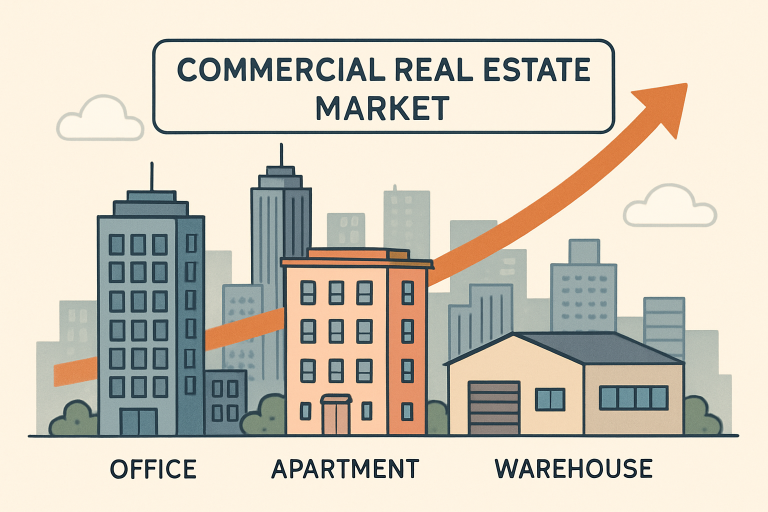
As commercial mortgage markets expand, a diverse range of properties benefit, from warehouses capitalizing on e-commerce to hotels rebounding with travel demand. This broad-based momentum has encouraged lenders to stay active, even as underwriting standards remain vigilant given macroeconomic headwinds.
Rising Delinquencies in the Office Sector
Despite marketwide growth, the office segment stands out for its mounting stress. In September 2025, U.S. office loan delinquencies rose sharply, fueled by a major default on a Manhattan skyscraper and broader caution surrounding return-to-office trends. The office loan delinquency rate jumped by 42 basis points to 8.12%, raising concerns about the future for legacy office properties as companies rethink workplace requirements and adapt to flexible work models. These shifts have led to falling occupancy, declining rents, and increased lender scrutiny in the office segment.
Sector Resilience and Diversification
While the office space faces pronounced headwinds, sectors like industrial and self-storage continue to post resilient fundamentals. Mixed-use developments and adaptive reuse strategies are also coming to the fore, as property owners look to reposition underperforming assets to meet new demand patterns. However, as delinquency rates in the office sector tick up, portfolio diversification and prudent leverage are essential risk-management tools.
Impact of Tariffs on Market Sentiment
New and expanded tariffs introduced in 2025 have injected uncertainty into the CRE market. In the first quarter, commercial real estate market sentiment experienced its second-largest decline in history, second only to the pandemic. Surveys indicate that nearly 80% of participants expect worsening economic conditions over the next year. Tariff-related disruptions, coupled with global geopolitical tensions, have prompted investors to take a more cautious approach to their commercial property allocations.
Lenders and borrowers alike are closely monitoring ongoing policy shifts that may further impact financing costs, import-export logistics, and overall economic growth. These uncertainties underscore the value of partnering with knowledgeable advisors who can provide clarity and help mitigate risk in turbulent times.
Growth in Multifamily Mortgage Debt
The multifamily sector continues to stand out for its strong fundamentals and consistent investor demand. In Q2 2025, multifamily mortgage debt grew by $27.7 billion, a 1.3% uptick that pushed outstanding balances to $2.19 trillion. This expansion is driven by several factors: population growth, ongoing urbanization, and a persistent housing affordability crisis have all fueled a sustained appetite for rental properties and apartment construction.
Institutional investors, private equity funds, and life insurance companies continue to favor multifamily as a defensive play in uncertain markets. Strong tenant demand and relatively stable cash flows help insulate this sector, making it an anchor for diversified portfolios.
Challenges with Maturing Office Loans
The commercial mortgage industry faces an upcoming test as 14,000 office properties anticipate loan maturities by the end of 2027, representing almost $290 billion in debt. Nearly one-third of all outstanding office loans must be refinanced, paid down, or restructured, often amid lower leasing activity, rising vacancy rates, and tighter bank lending criteria. Borrowers struggling to meet refinancing terms could trigger a wave of distressed sales or heightened defaults unless market conditions improve or policy interventions materialize.
Both lenders and borrowers are proactively exploring solutions, including loan extensions, modifications, and structured workouts. As deadlines approach, transparency, communication, and risk assessment become paramount. This looming “maturity wall” is emerging as a critical focus for analysts, who warn that unresolved challenges could have wider repercussions for local economies and the broader financial system.
Conclusion
The 2025 commercial mortgage landscape is defined by rapid adaptation and diverging sector performance. While demand for multifamily housing spurs new lending and debt growth, office properties face persistent headwinds from shifting workspace needs and daunting debt deadlines. External shocks, such as tariffs and geopolitical developments, amplify uncertainties and heighten the need for market vigilance.
For investors, developers, and asset managers, the ability to identify emerging risks and align strategies with the latest market intelligence will define success in today’s complex environment. Working closely with expert commercial mortgage advisors empowers stakeholders to make informed choices, stabilize assets, and seize new opportunities as the market evolves.
The post Commercial Mortgage Trends in Today’s Economy appeared first on The Startup Magazine.
source https://thestartupmag.com/commercial-mortgage-trends-in-todays-economy/
Discover more from The Veteran-Owned Business Blog
Subscribe to get the latest posts sent to your email.

You must be logged in to post a comment.