
Organizations that do not define an organizational culture leave the door open for the culture to define itself—which is often fraught with dissatisfaction, toxicity, and misalignment.
Corporate Culture, Organizational Culture, or Workplace Culture all share the same meaning. The term represents the shared beliefs, values, attitudes, and behaviors that describe an organization and its employees. It is exhibited by the environment of an organization through the working relationships between the leadership, management, workforce, and customers.
Corporate culture is often shaped by the organization’s mission, vision, and values, as well as by the personalities and characteristics of its leadership and employees. Corporate culture has a significant bearing on an organization’s performance, its ability to attract and retain talent, to innovate, and to compete in the market. Organizations with a positive corporate culture have more engaged, committed, and motivated employees. On the contrary, organizations with a weak or toxic organizational culture tend to have unproductive, disengaged, and disgruntled employees.
Improving the organizational culture leverages several benefits, including high staff retention rates, ease of hiring the right people, positive work atmosphere, and improved performance and bottom line.
The Cultural Web Model, developed by Gerry Johnson and Kevan Scholes in the 1990s, is a framework used to analyze and understand an enterprise’s organizational culture. The model assists in managing or changing the organizational culture to align with strategic objectives or to address cultural issues impeding progress.
The model helps individuals and organizations identify the underlying beliefs, values, and assumptions that shape how people behave and interact within a company. The framework is a strategic tool for both diagnosing an organization’s culture and planning interventions to create a desired cultural shift.
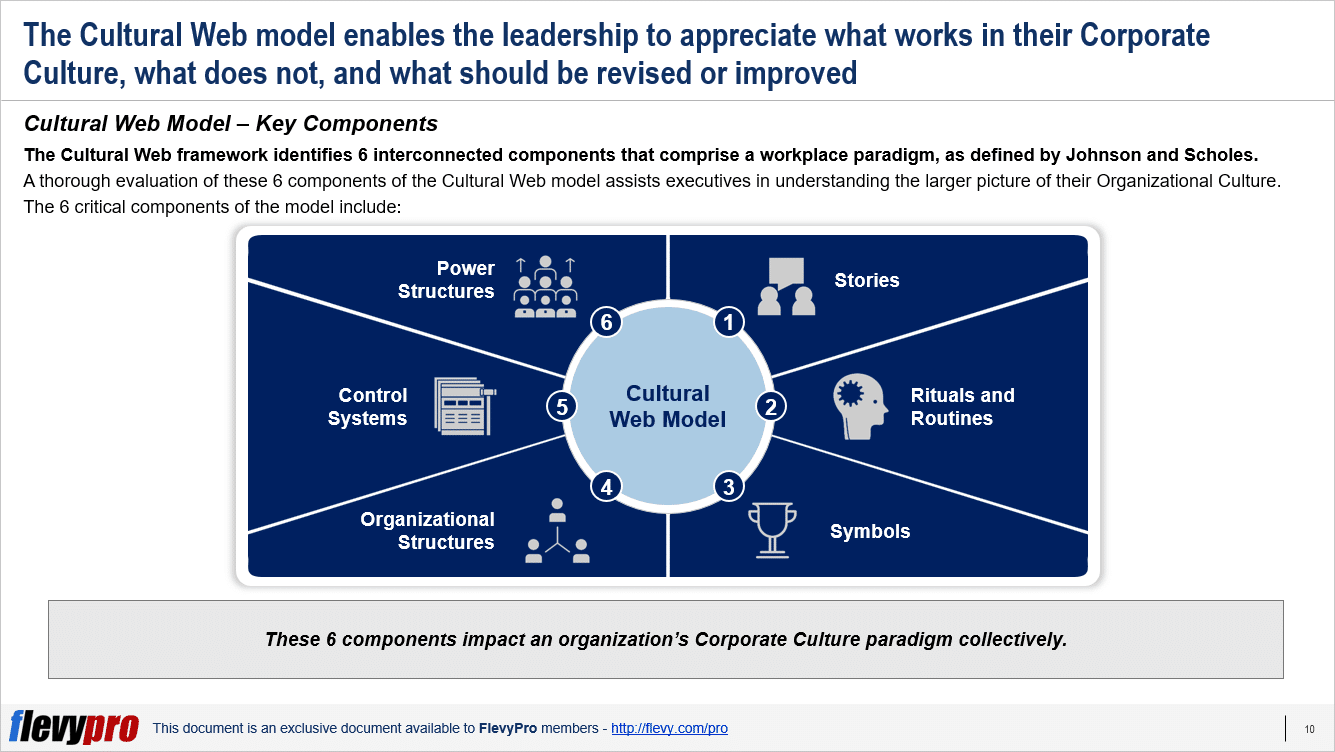
The framework identifies 6 interconnected components that comprise a workplace paradigm. A thorough evaluation of these components assists in understanding the bigger picture of an organizational culture:
- Stories
- Rituals and Routines
- Symbols
- Organizational Structures
- Control Systems
- Power Structures
Let’s dive deeper into the first 3 components of the model, for now.
Component 1: Stories
Consider this component to be the organization’s collective memory. Stories reveal a great deal about what an organization values. The component may encompass an account of the organization’s history, its current status, the achievements of its key personnel, and employee testimonials regarding their experiences at the company.
Such narratives and stories frequently shed light on the fundamental principles upheld by an organization as well as the actions that are deemed commendable at the workplace.
Component 2: Ritual and Routines
This component refers to regular and repetitive actions and behaviors which are permissible and valued within the organization. Routines may also be interpreted as expectations from the employees, encompassing aspects such as their daily arrival and departure as well as the nature of activities that transpire during the course of the day.
Through a variety of recurring circumstances, people gain an understanding of expected conduct and what is considered standard behavior at their workplace. It is debatable whether or not such action is constructive, but it has become the norm within the organization’s culture.
Component 3: Symbols
The next component involves visual cues that convey the organization’s identity and values. This involves graphical depictions of the organization, encompassing elements such as logos, office ambiance, and dress codes (official or informal). These visual representations carry immense cultural significance for the organization, customers, and people.
A company’s visual communication, branding, and industry-specific jargon signify this element. This component entails the image that comes to the employees and customers’ minds when they envision the organization.
Interested in learning more about the other components of the Cultural Web Model? You can download an editable PowerPoint presentation on Cultural Web Model here on the Flevy documents marketplace.
Do You Find Value in This Framework?
You can download in-depth presentations on this and hundreds of similar business frameworks from the FlevyPro Library. FlevyPro is trusted and utilized by 1000s of management consultants and corporate executives.
For even more best practices available on Flevy, have a look at our top 100 lists:
- Top 100 in Strategy & Transformation
- Top 100 in Organization & Change
- Top 100 Consulting Frameworks
- Top 100 in Digital Transformation
- Top 100 in Operational Excellence
SOURCE: https://flevy.com/blog/cultural-web-model/ https://flevy.com/blog
Discover more from The Veteran-Owned Business Blog
Subscribe to get the latest posts sent to your email.

You must be logged in to post a comment.